Commons – On What Unites Us
2026
The 2026 biennal explored how communities are formed through shared resources, negotiated access and collective responsibility. Drawing on the traditional Alpine concept of the Allmende—land, forests, paths and pastures collectively used and cared for by a community—the programme asked how principles of sharing, stewardship and negotiation can shape contemporary social and ecological relationships.
The jury, consisting of Britta Peters, Cornelia Offergeld and Vlado Velkov, selected seven artistic projects that approached these questions through very different forms, materials and situations.
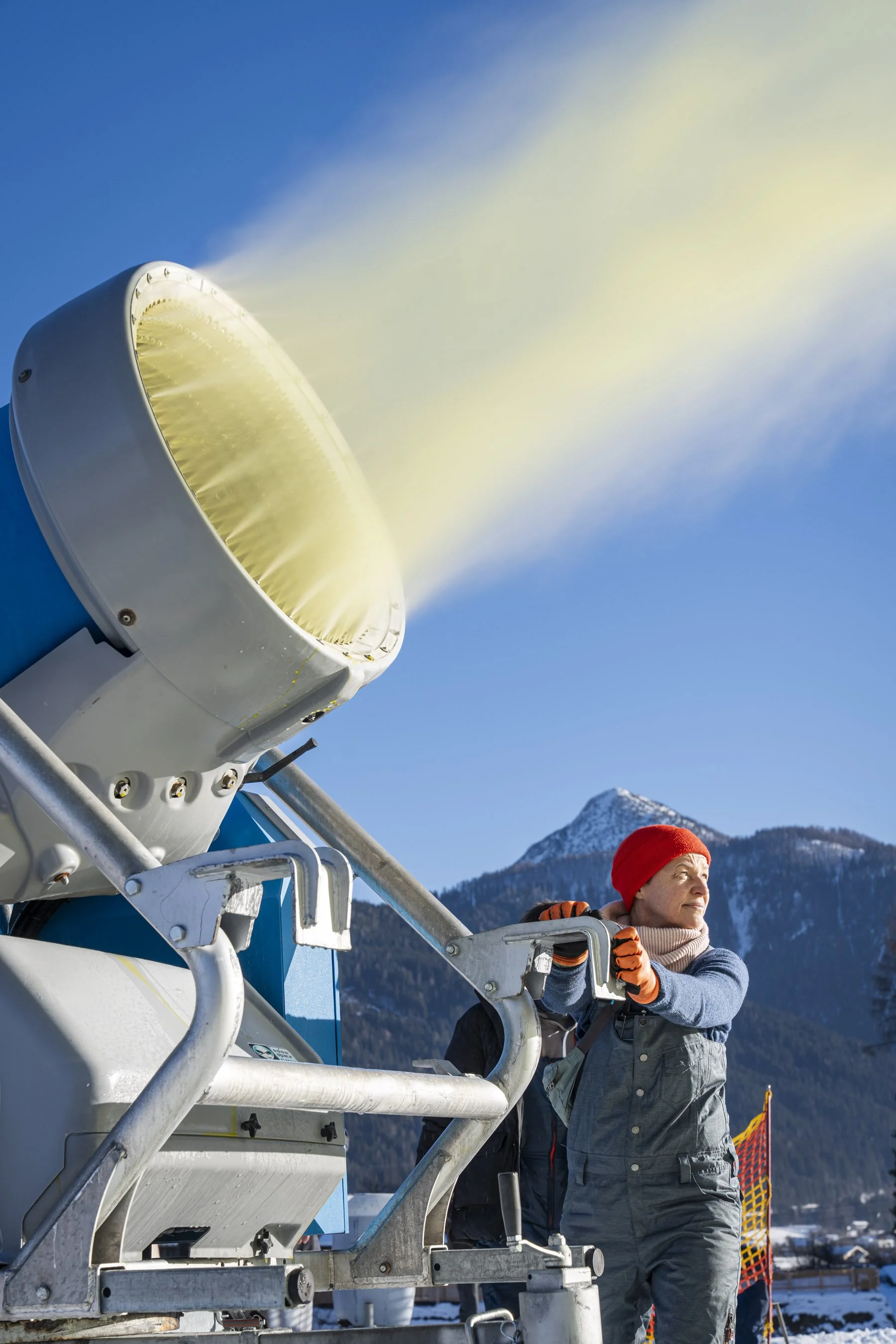
AestheticAthletics+ invited visitors to sweat together in a contemporary interpretation of the traditional Alpine Brechelbad. Nicole Six and Paul Petritsch’s Schneearchiv relied on the participation of local residents, bringing together trophies and stories that reflected the location’s sporting history through objects connected to very personal achievements and memories. Markus Jeschaunig’s Frostgarten turned attention to what sustains us, exploring winter food production and culminating in a performative communal dining event. Stephanie Lüning used a snow cannon to transform the ski landscape with coloured snow in a temporary, constantly changing installation.
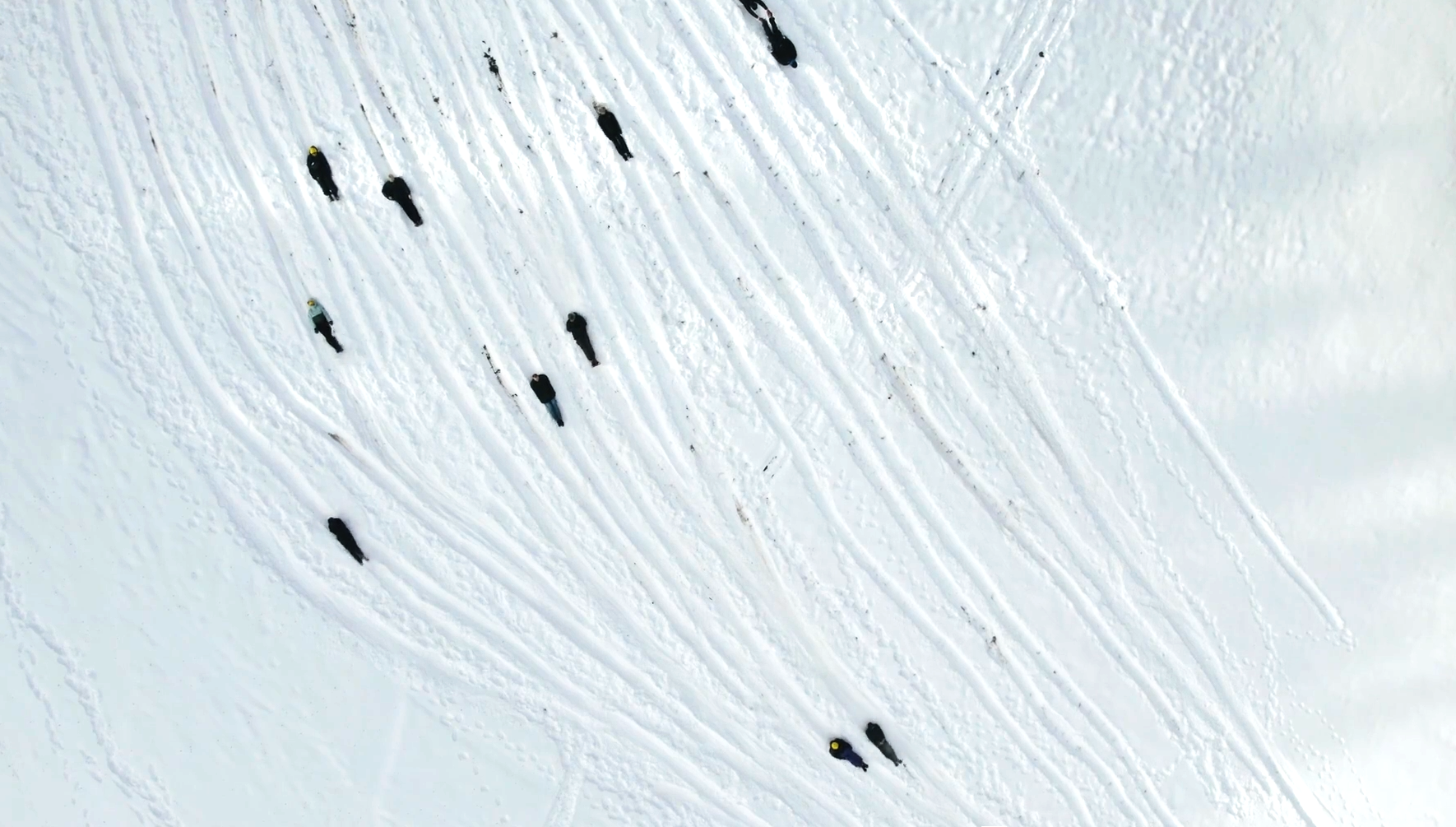
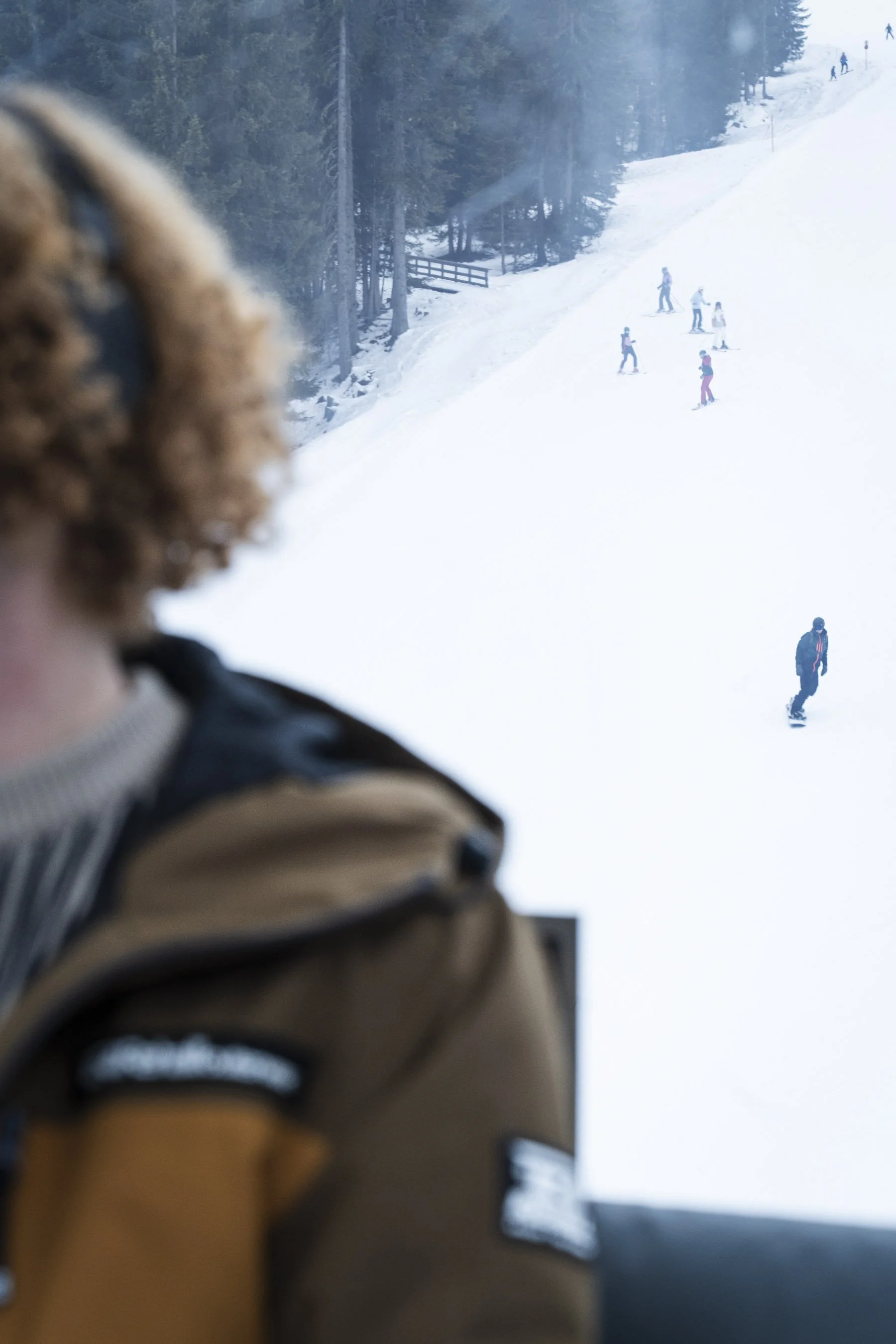
In 4 Meters per Second, Helgard Haug of Rimini Protokoll turned a gondola ride accompanied by an audio piece into a shared experience, bringing passengers together as a temporary community suspended between the village and the mountain. Piotr Urbaniec invited visitors to explore gravity together in a series of snow-sliding workshops, while Ronni Shalev and Vero Róza Risnovska gave snow itself a voice in Gemeinderatsversammlung, a fictional municipal debate between snow figures confronting the scarcity of their essential resource.
The accompanying discursive programme Art as Commons, curated by Kinga Szemessy with Fanni Nánay, investigated how art in public space can become a form of commoning. Through field research, a lecture and an open discussion, artists, researchers, local communities and visitors were invited to consider how access, visibility, participation and responsibility could be collectively negotiated.
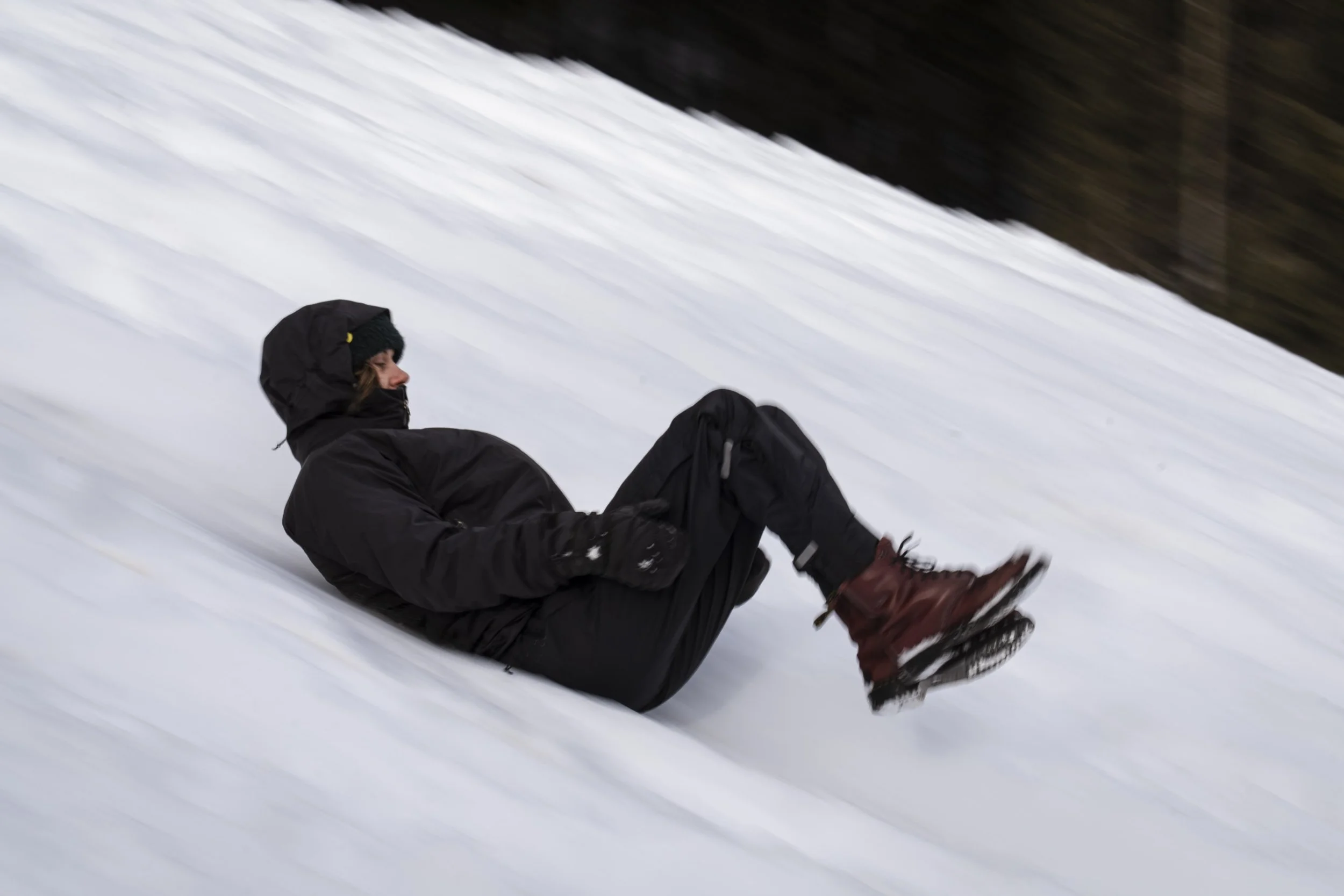
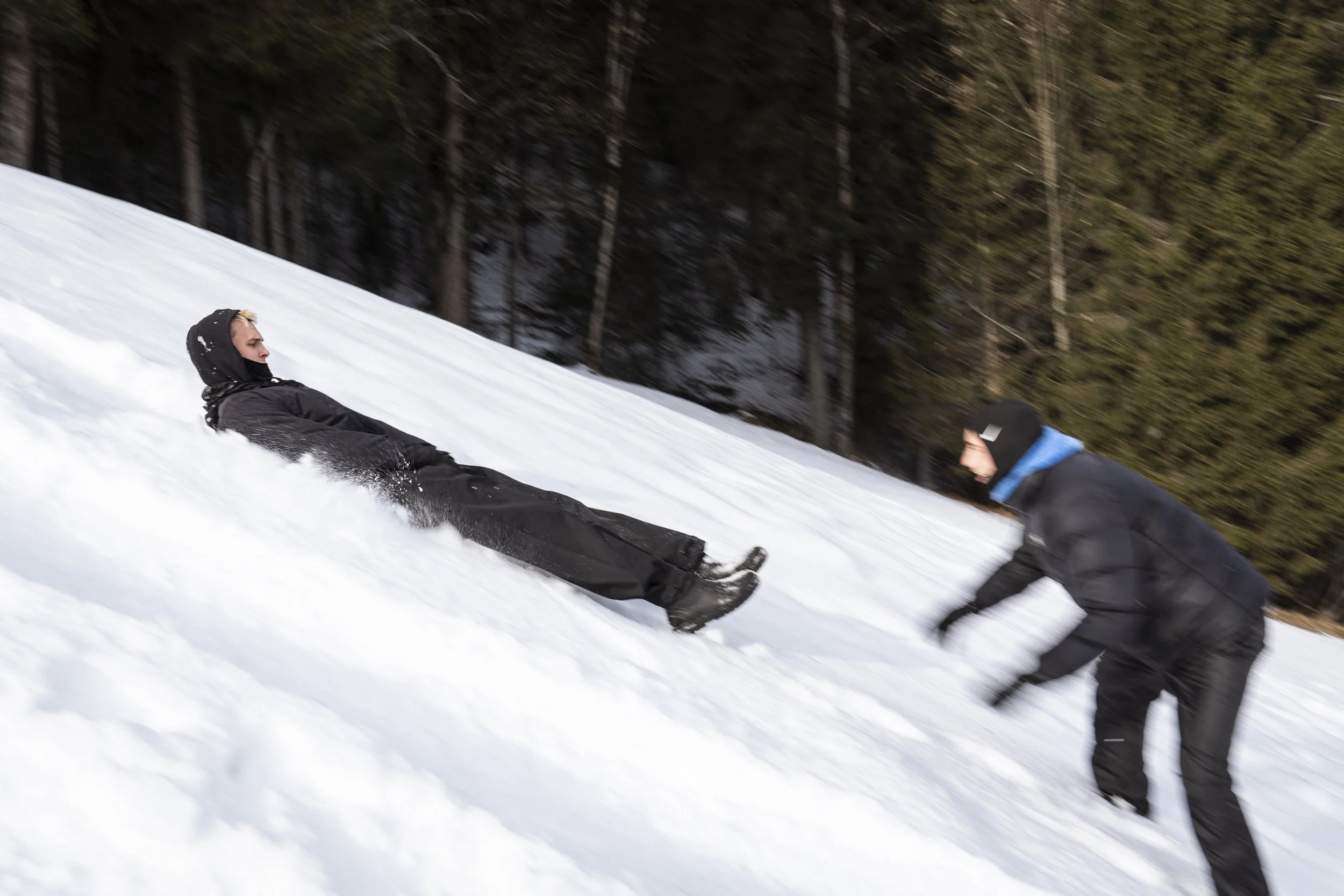
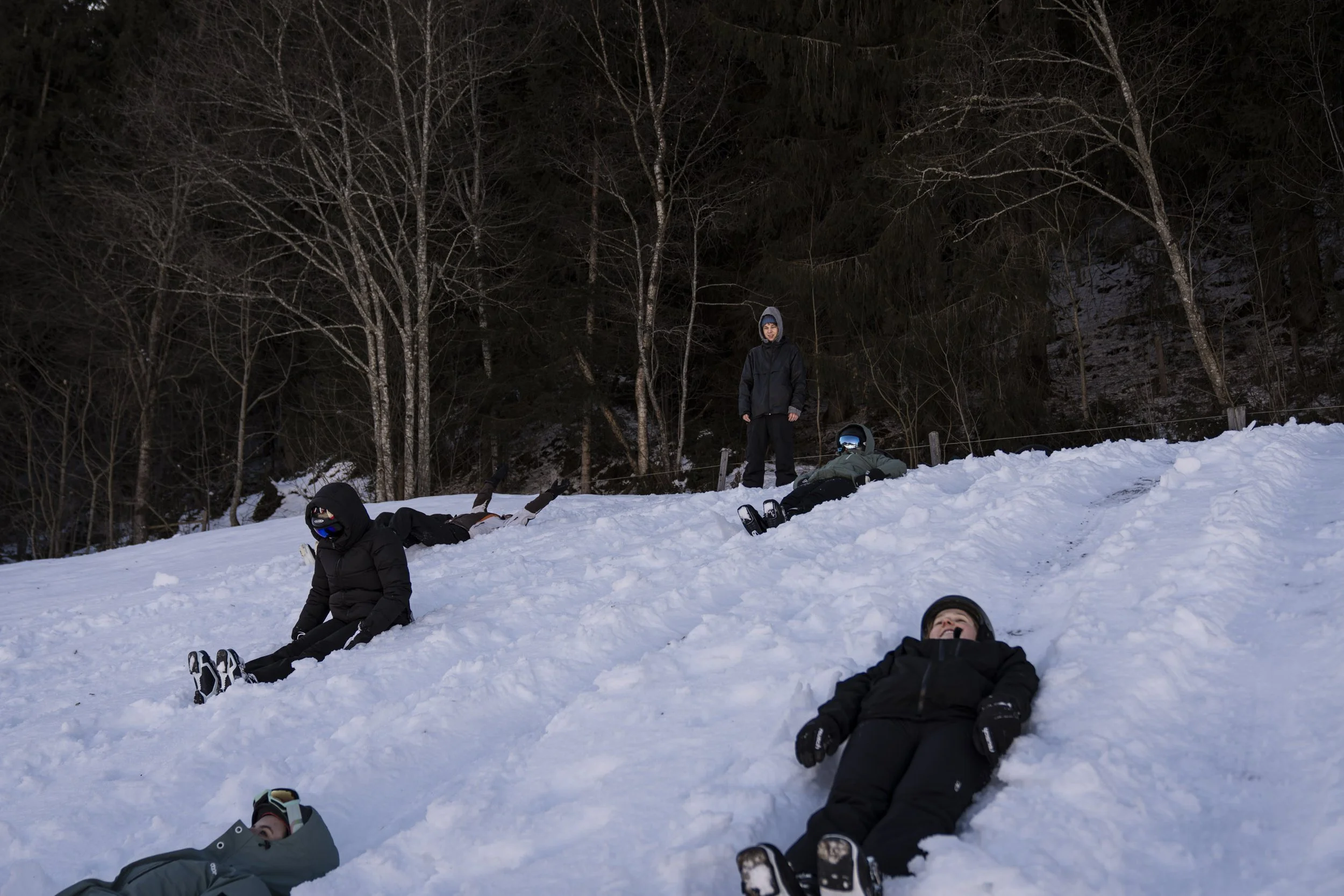
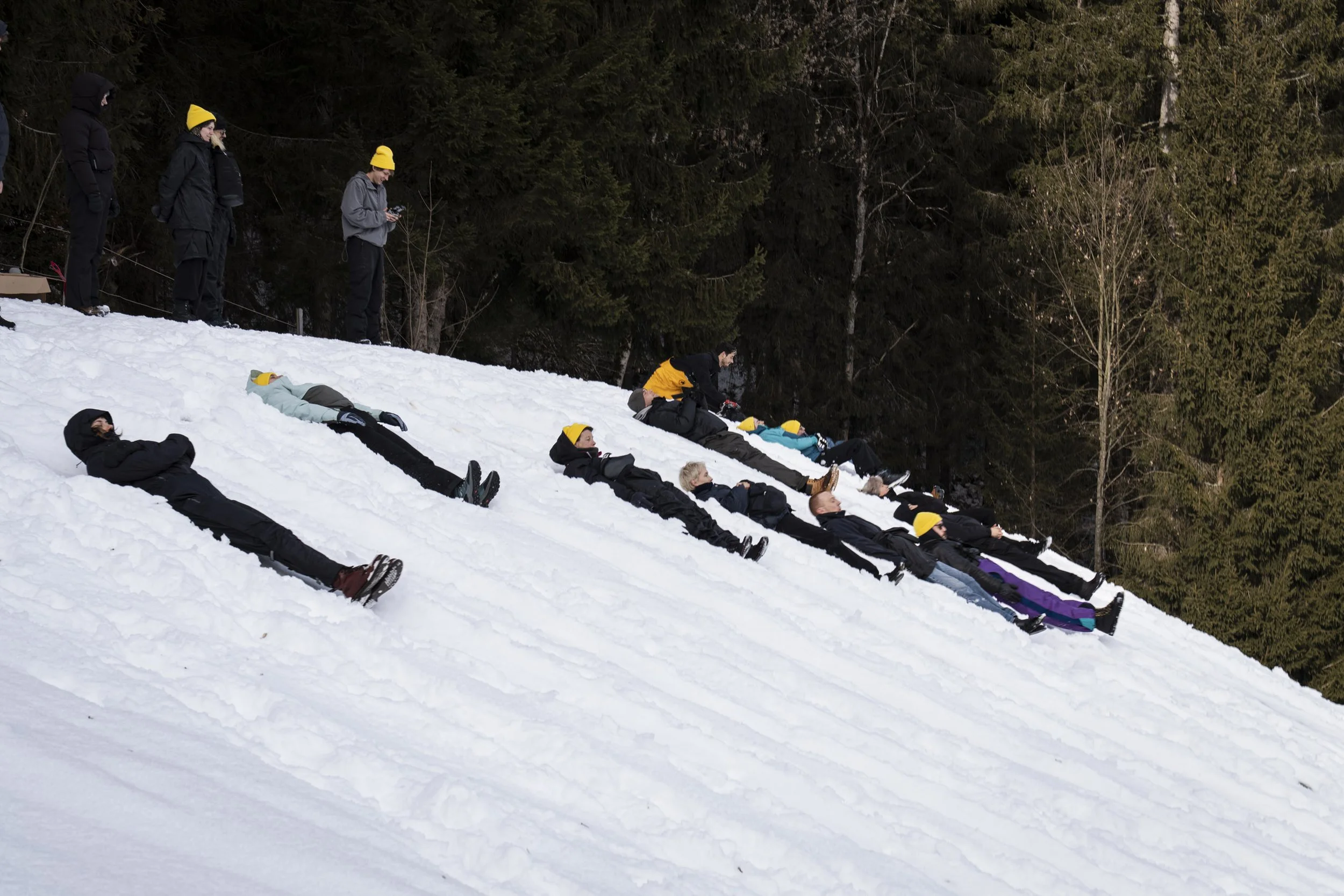
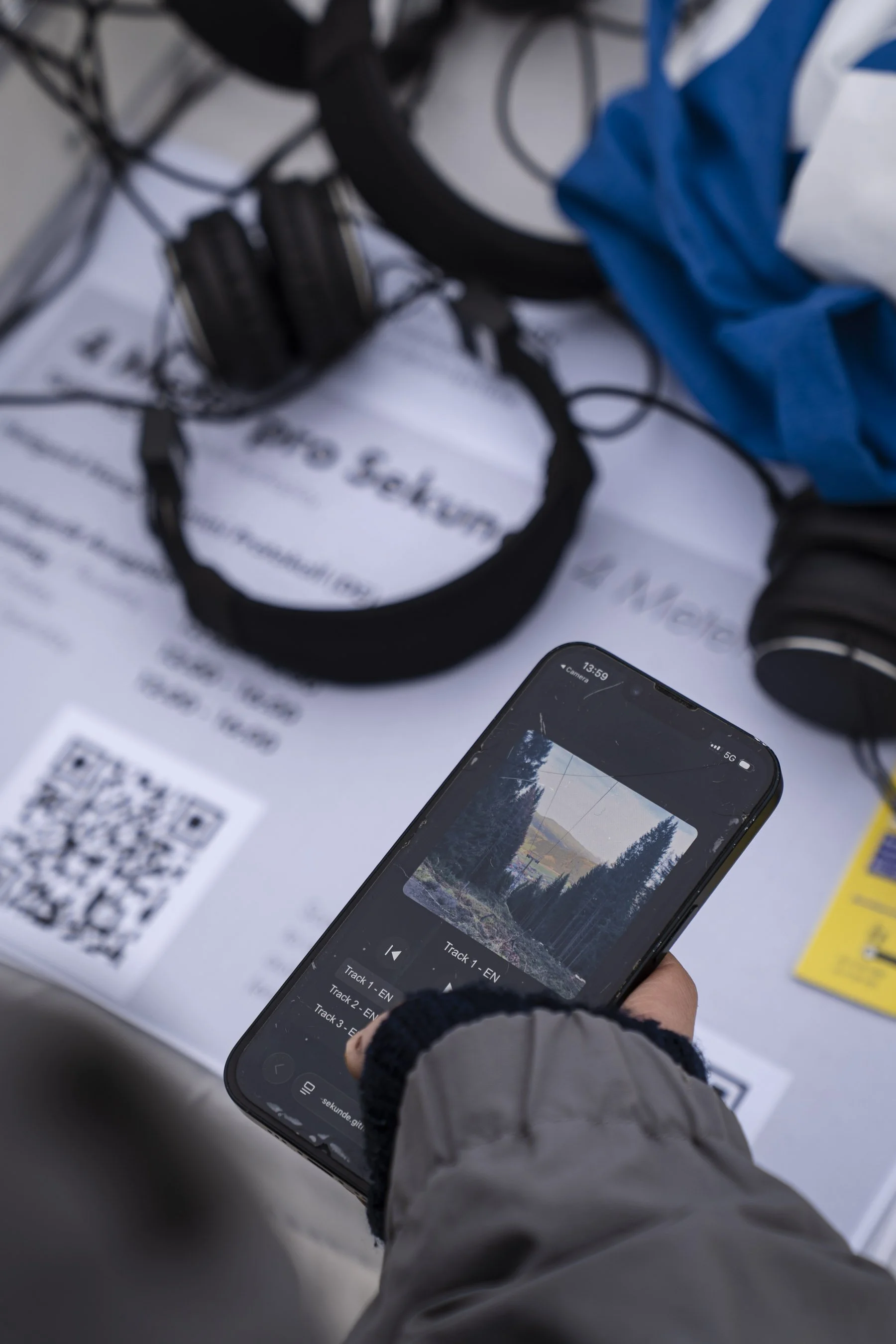
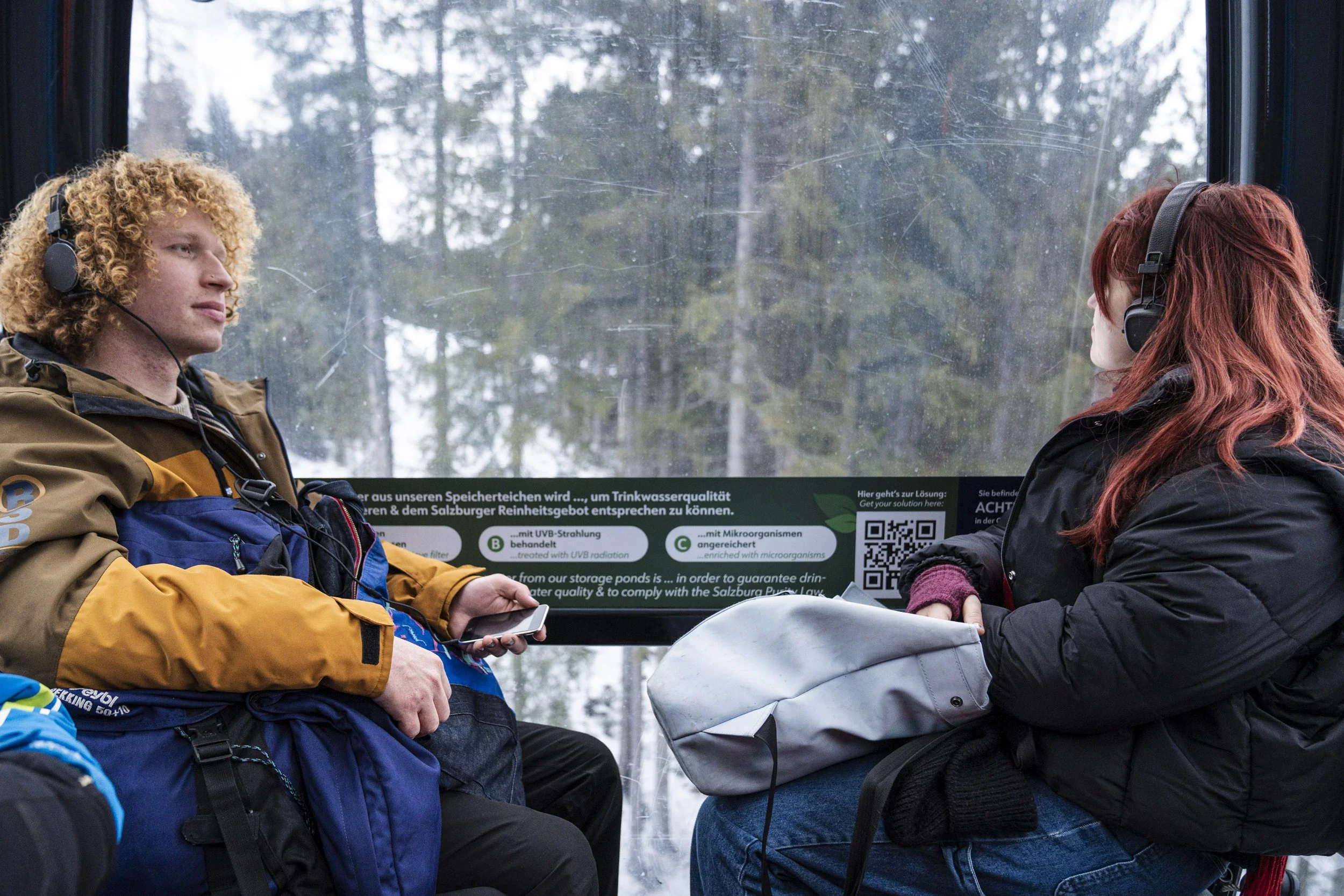
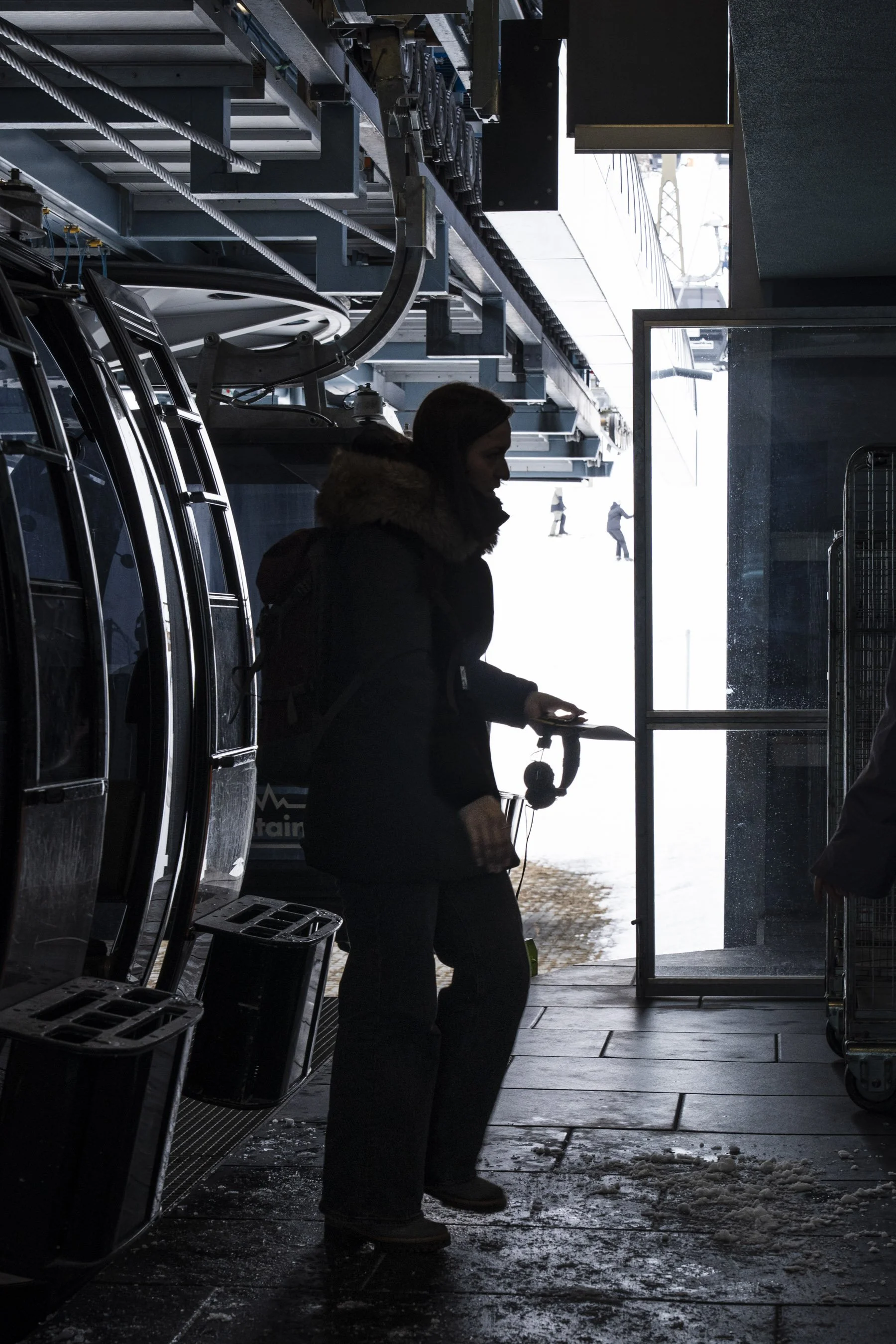
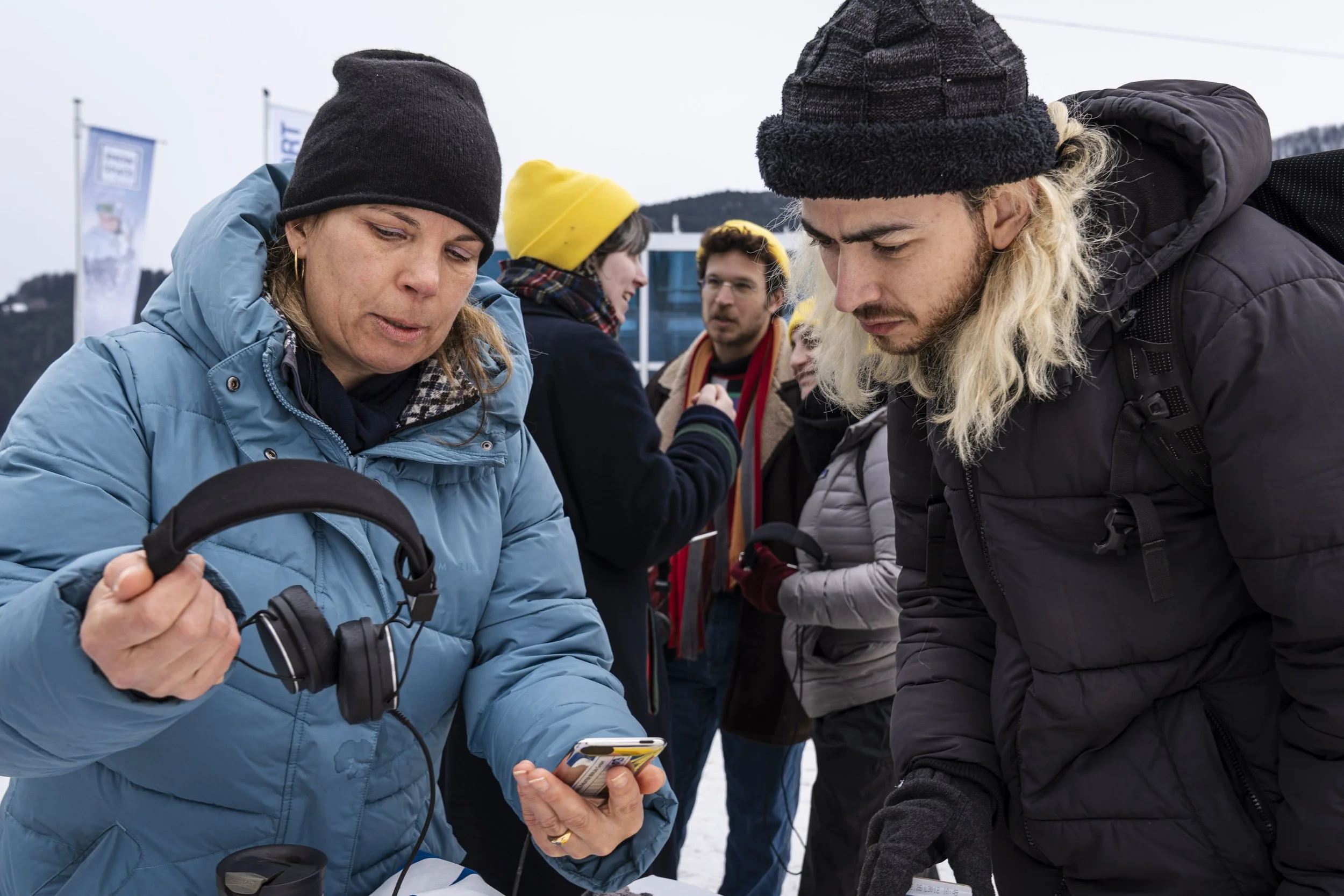
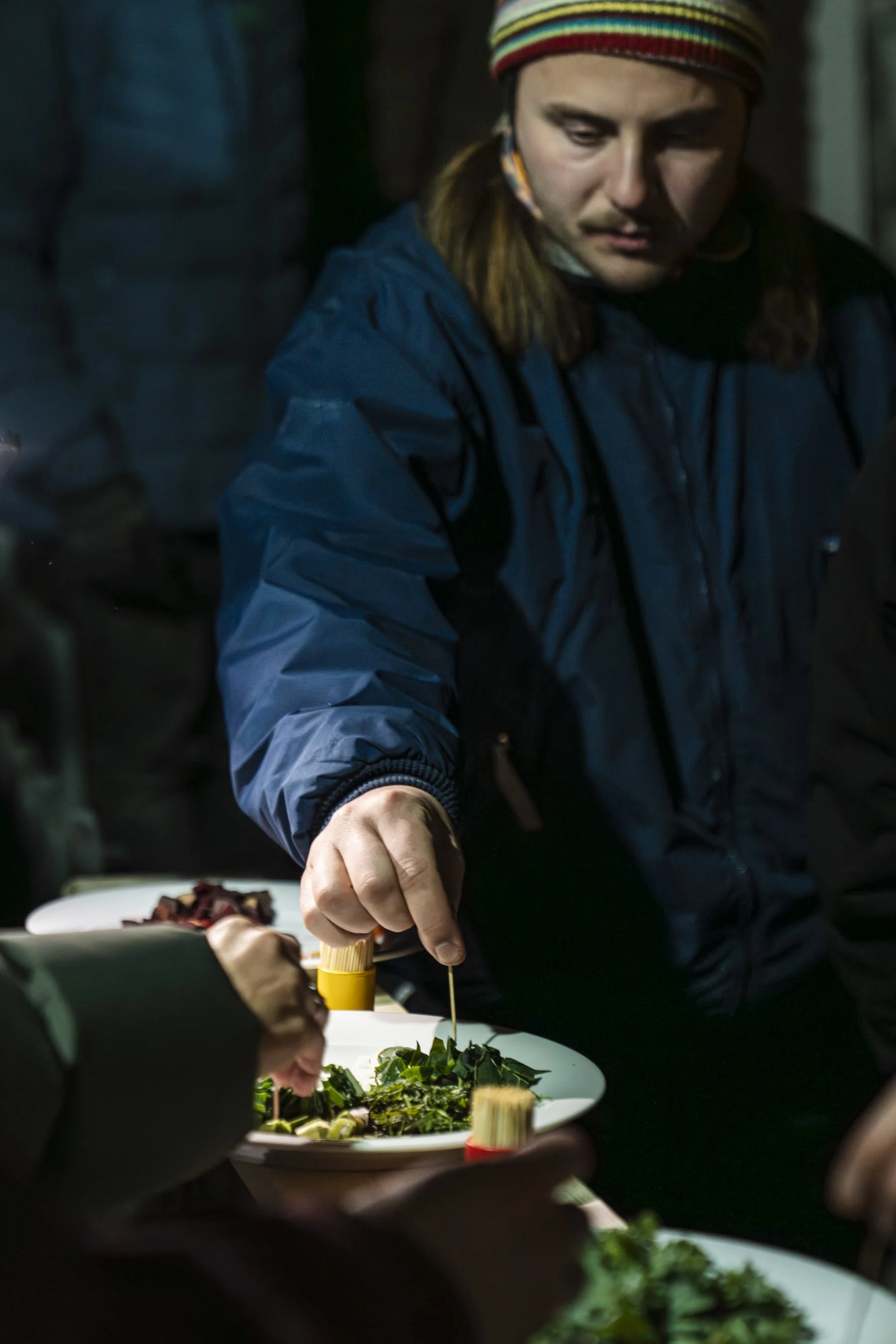
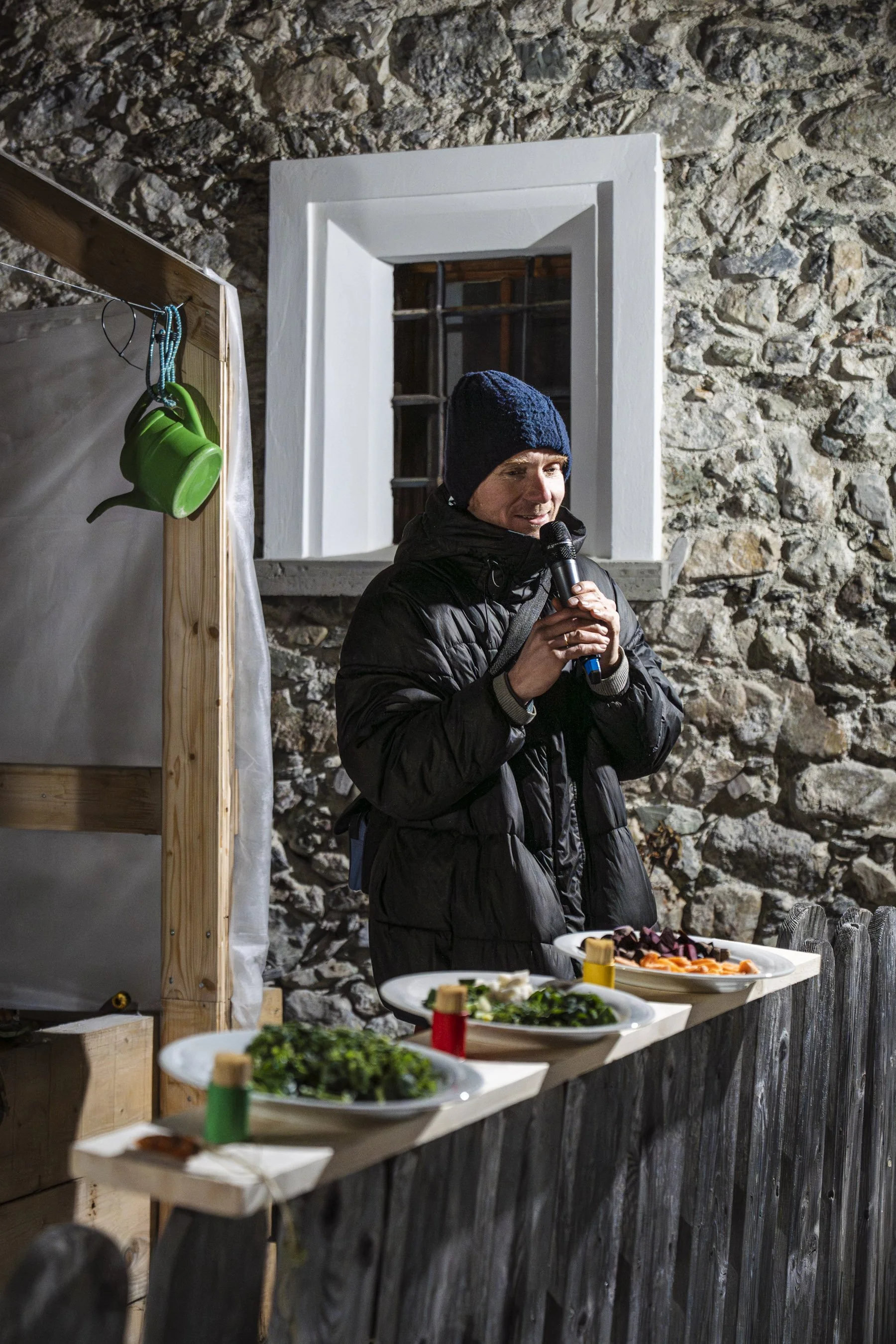
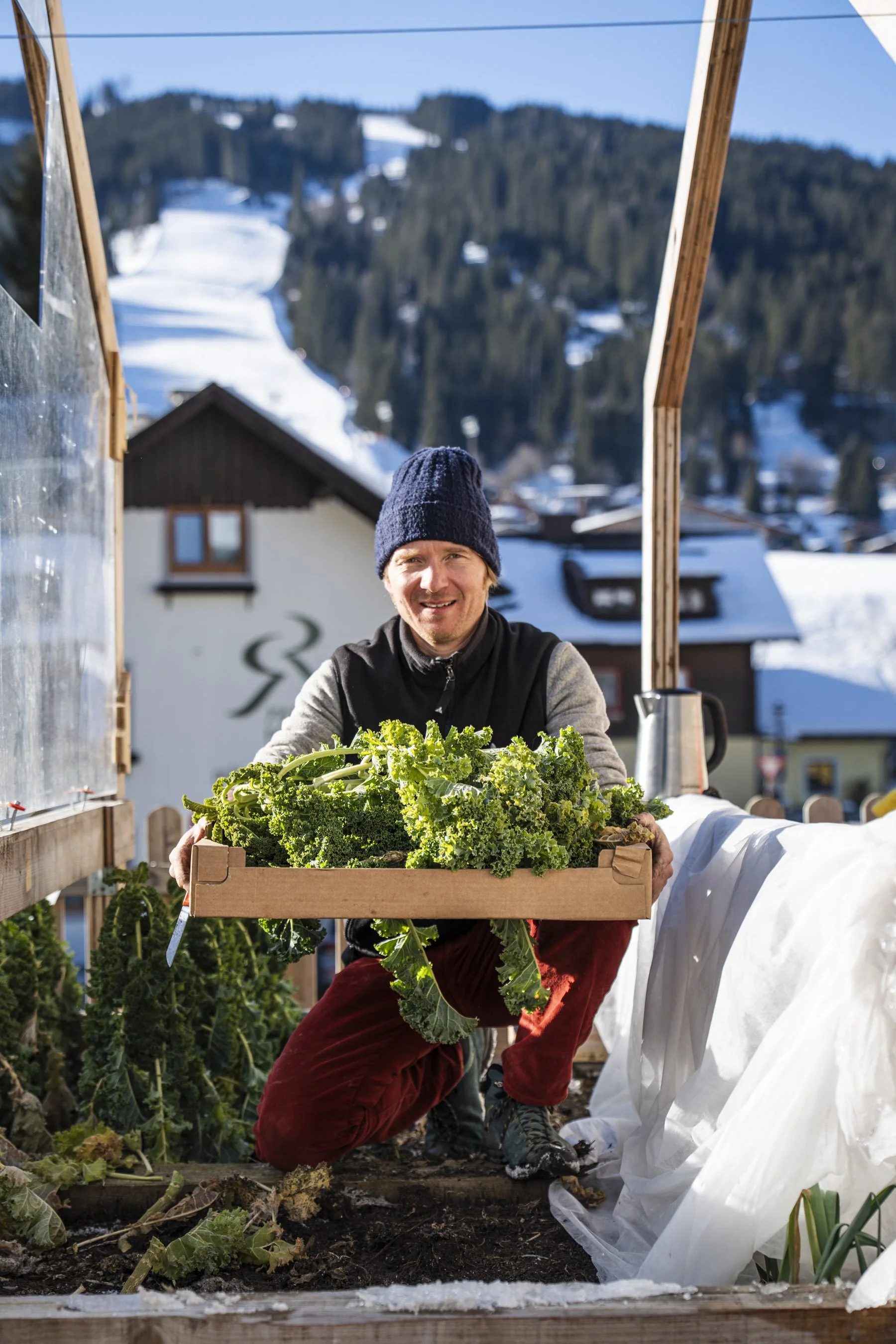
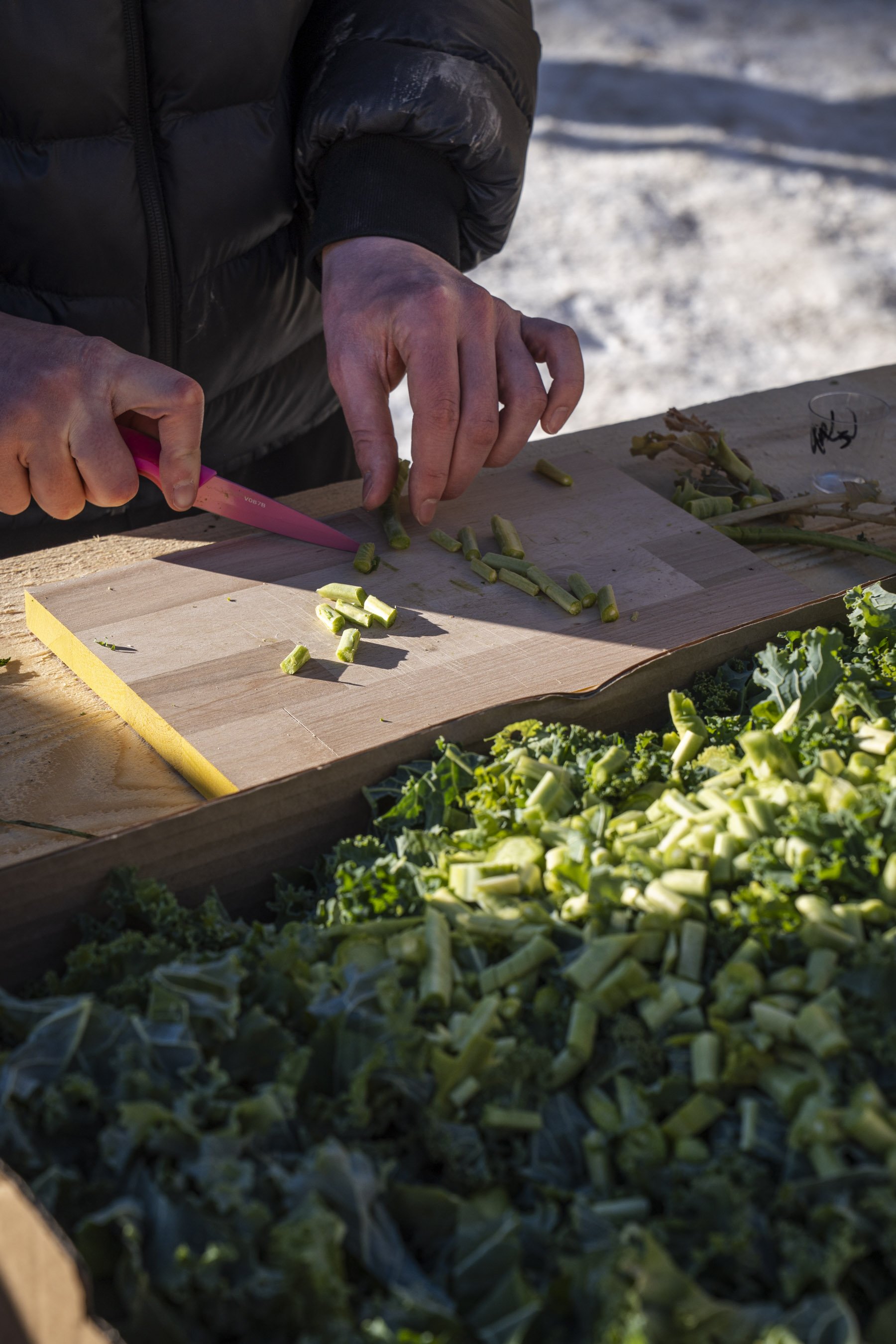
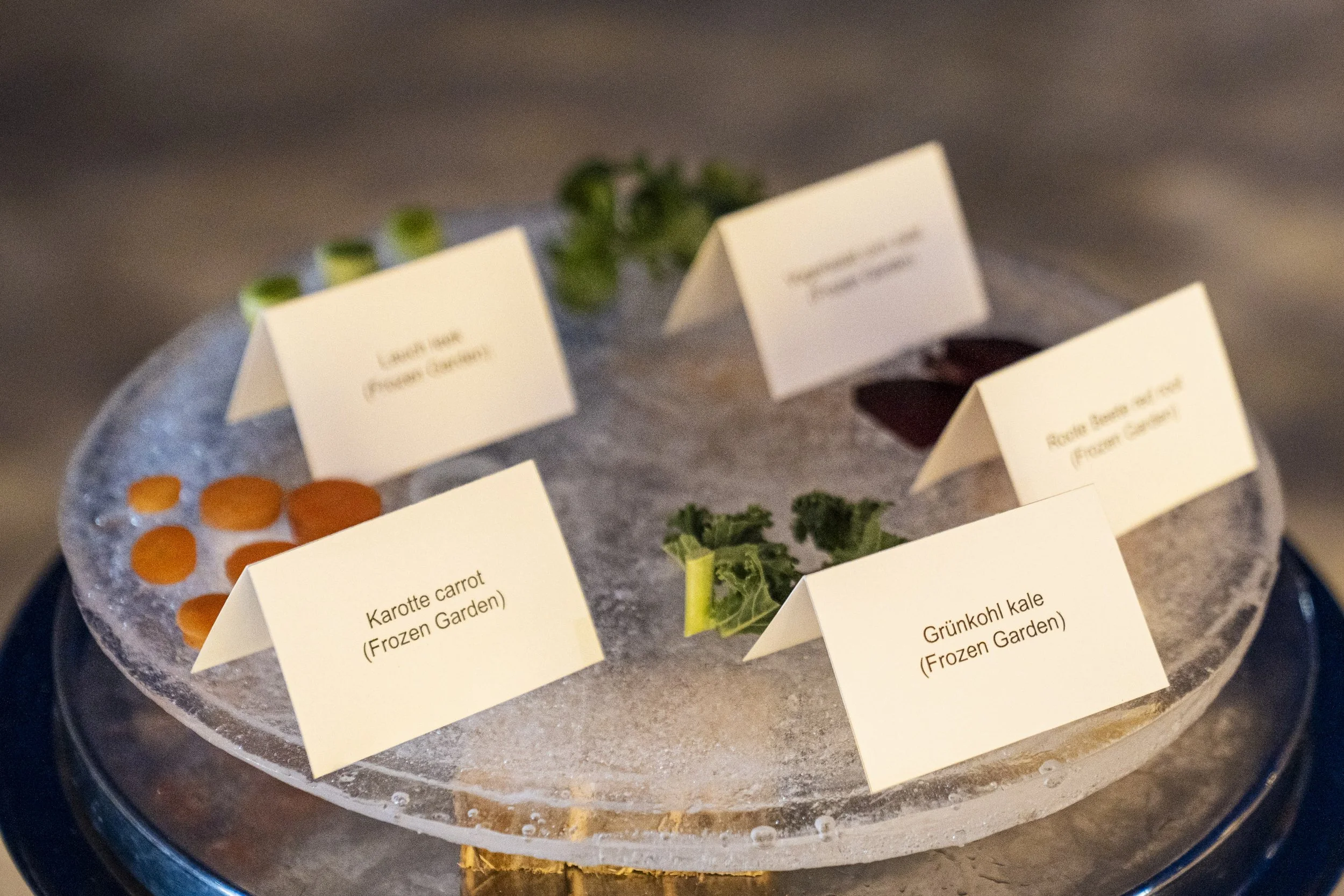
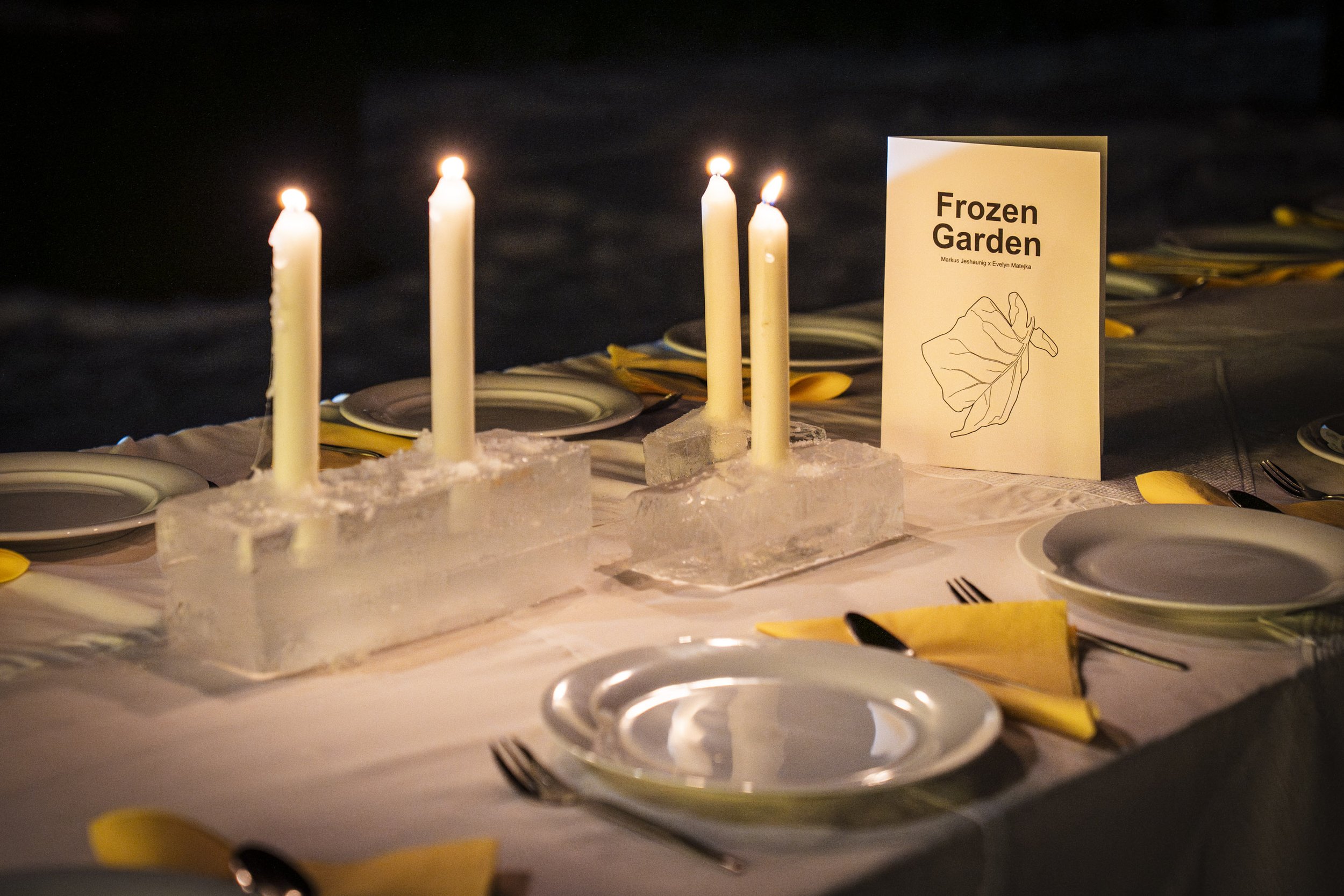
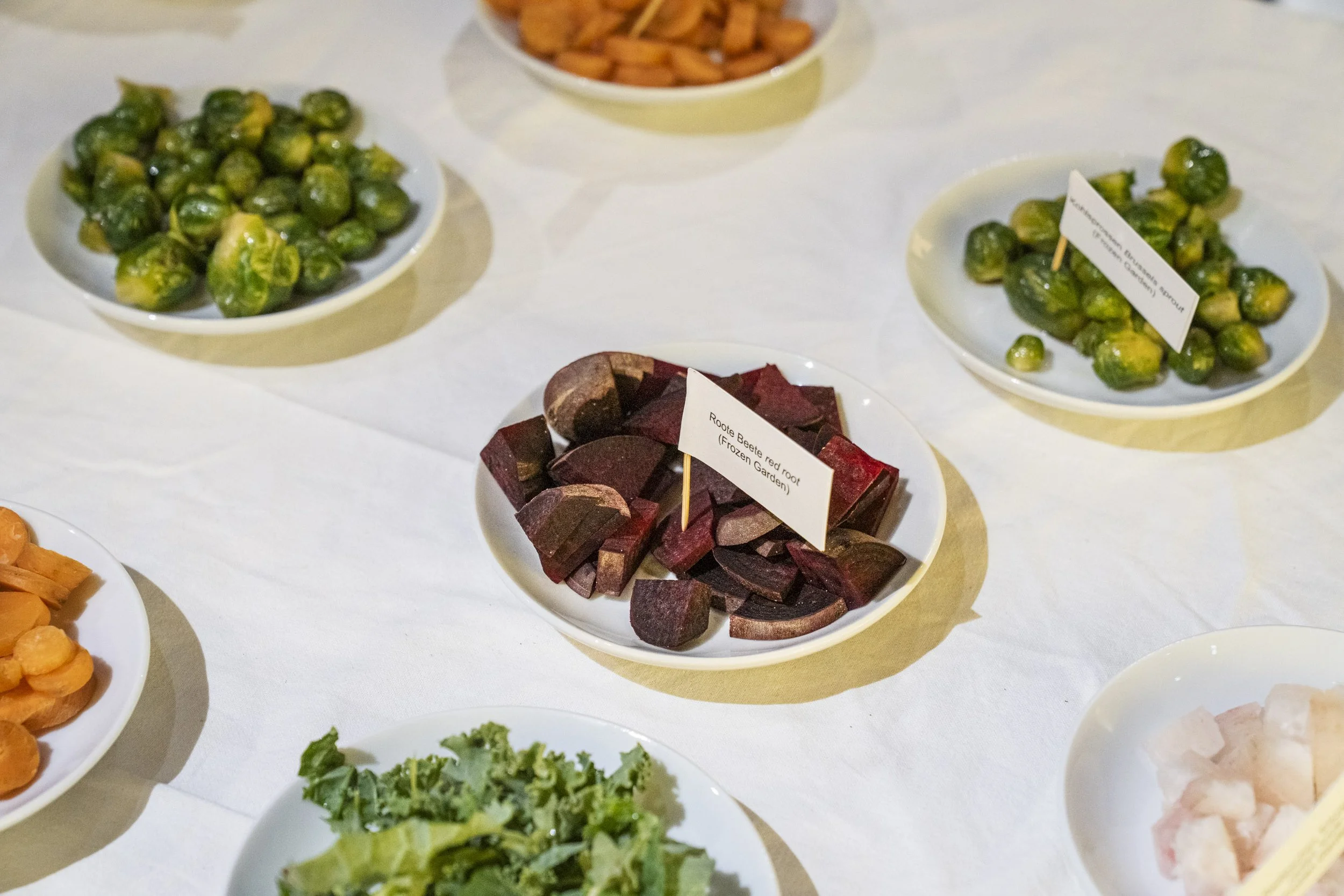
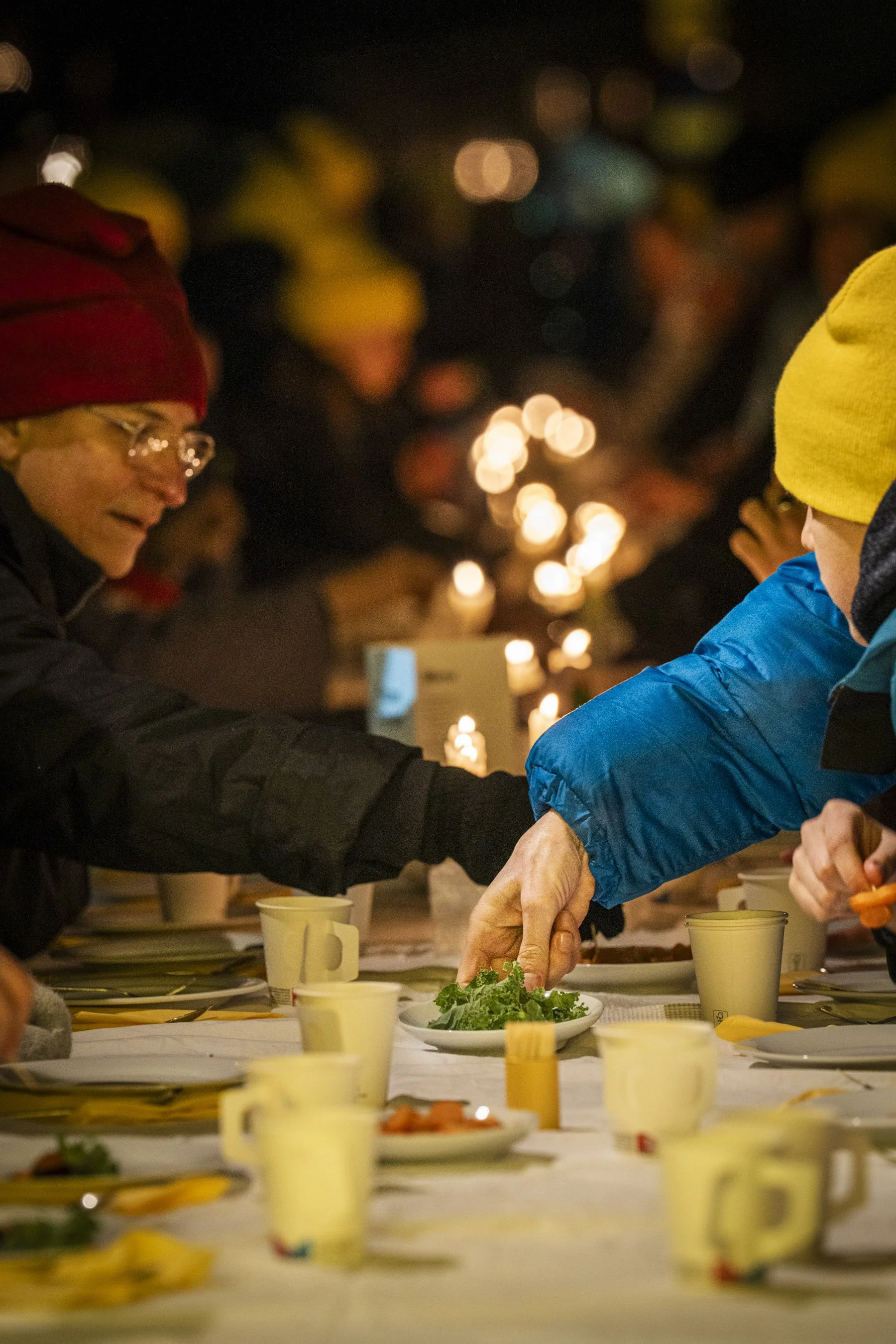
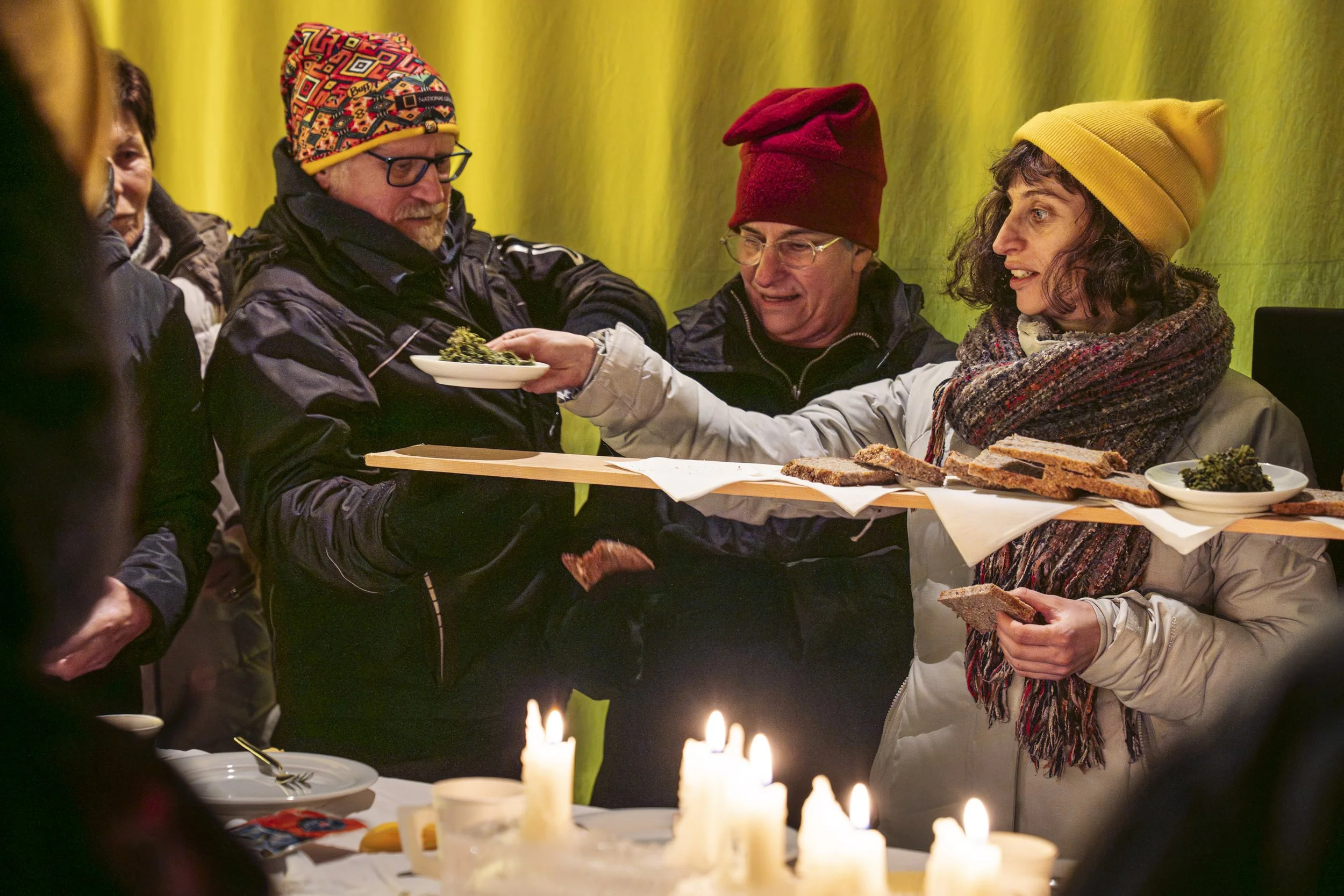
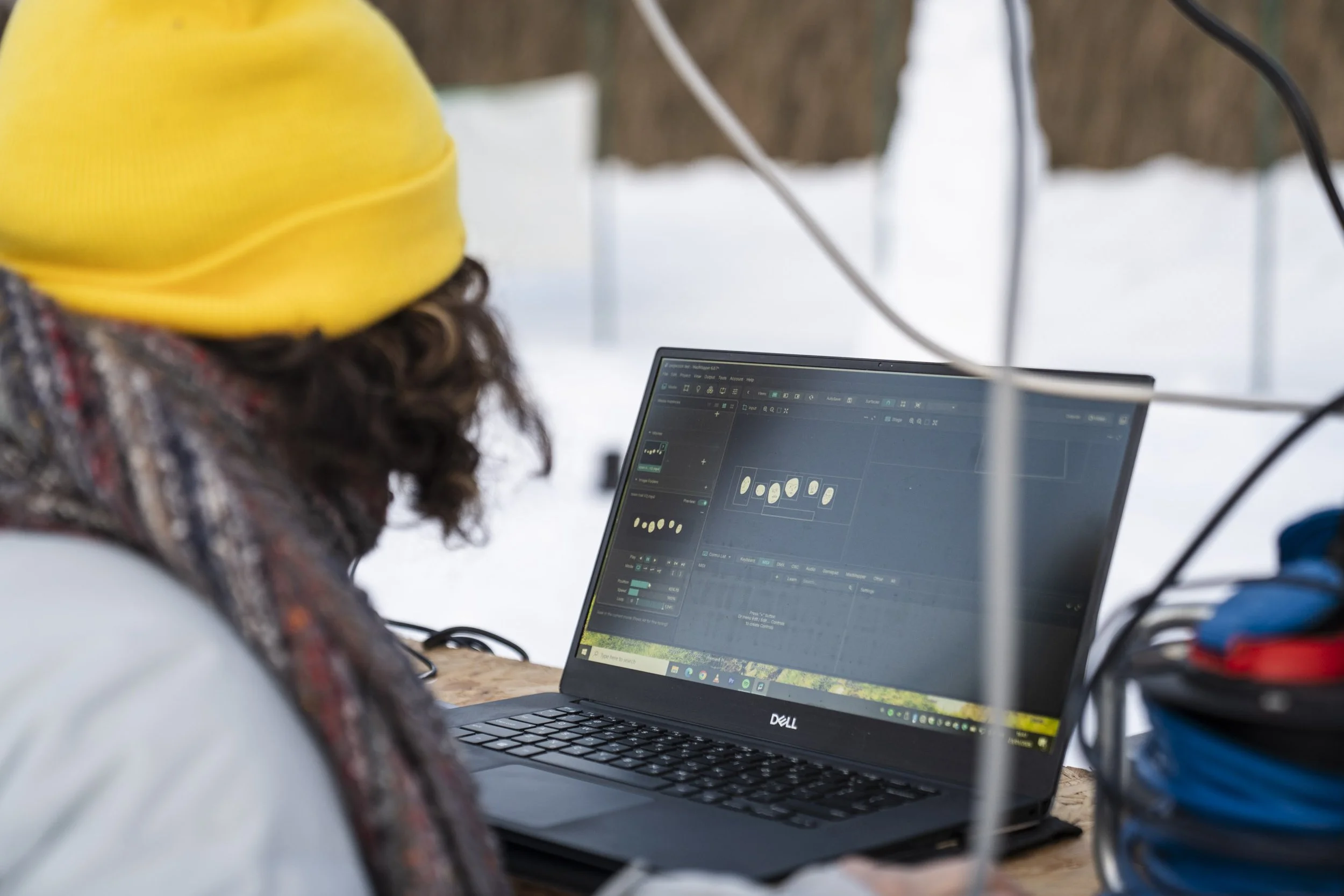
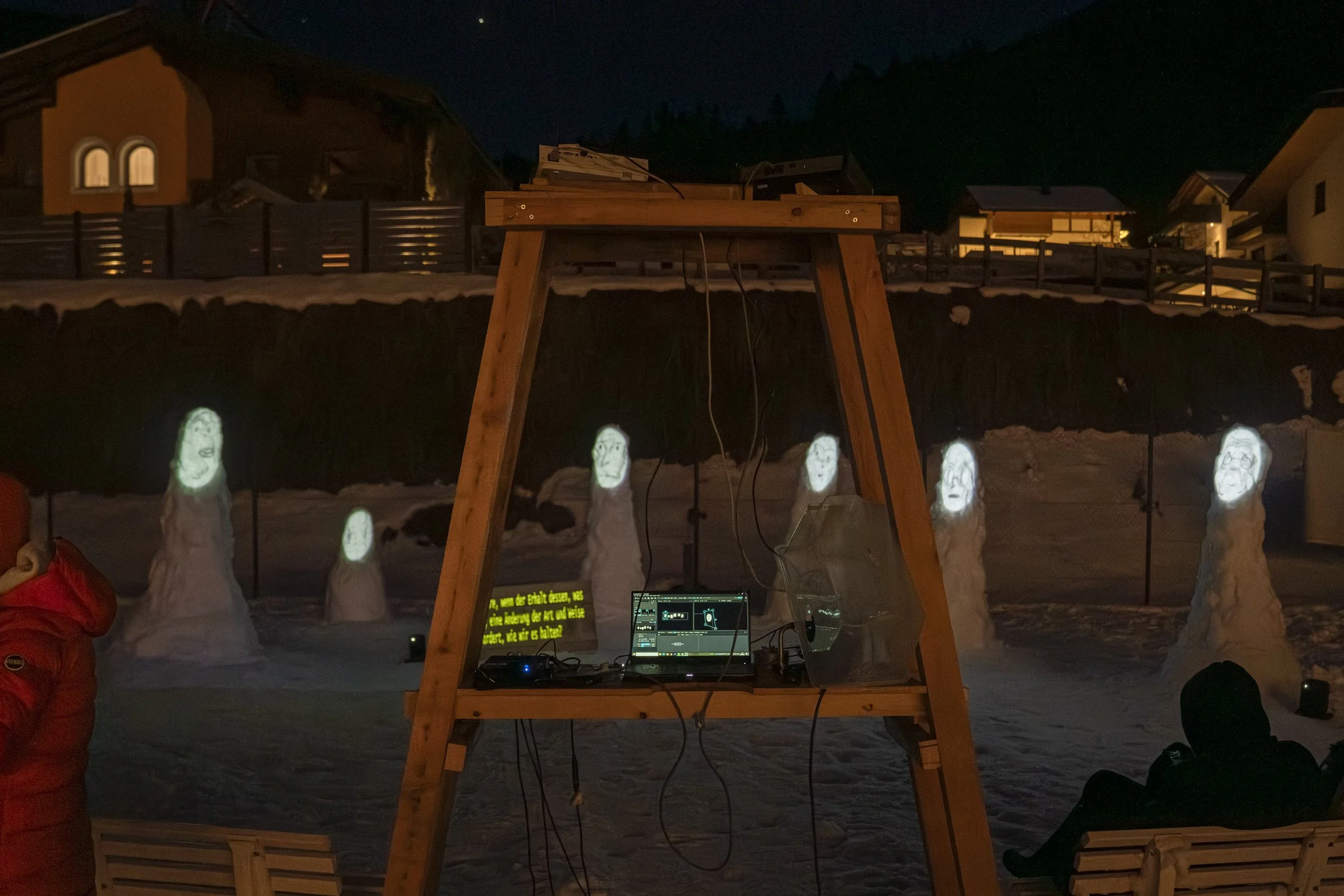
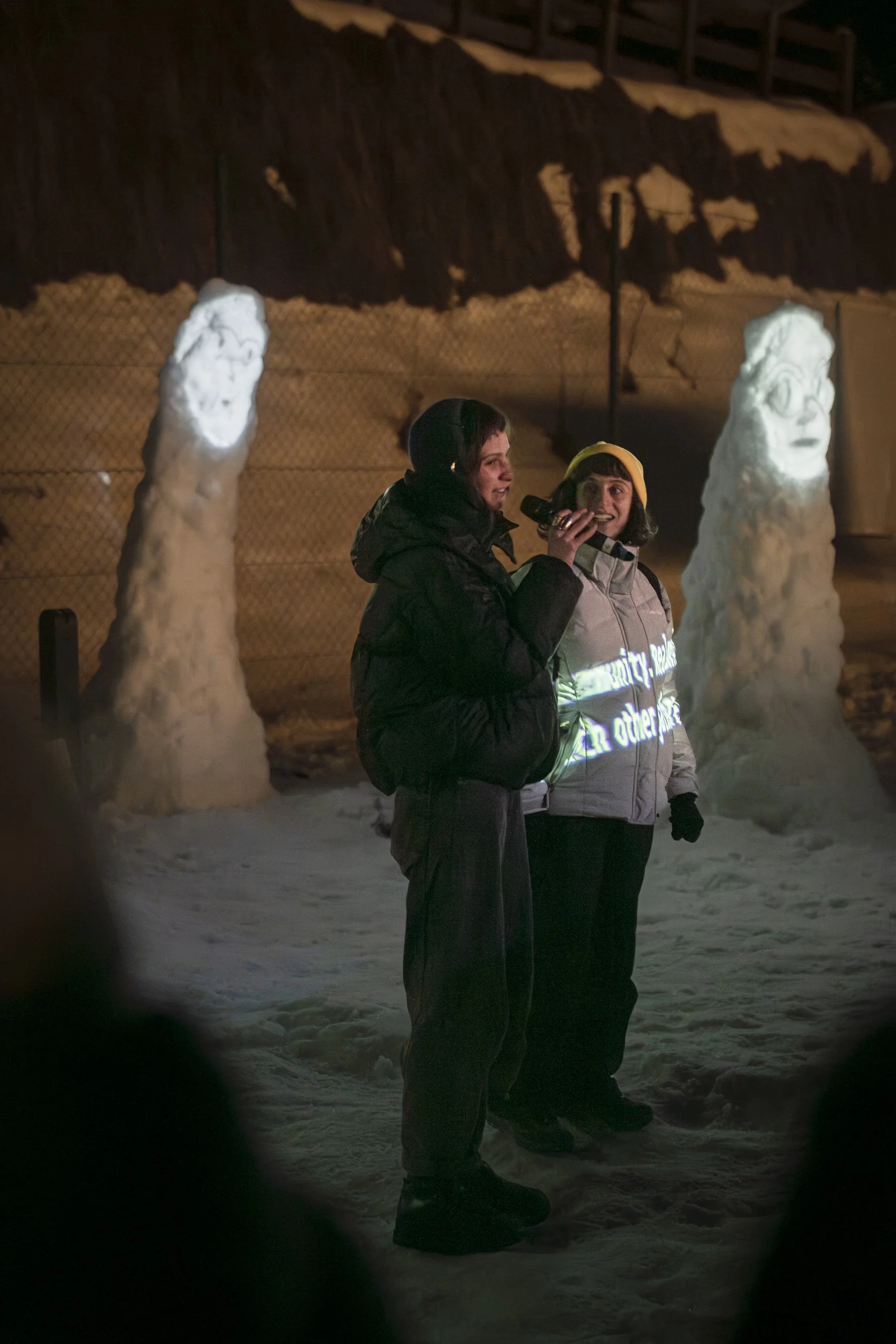
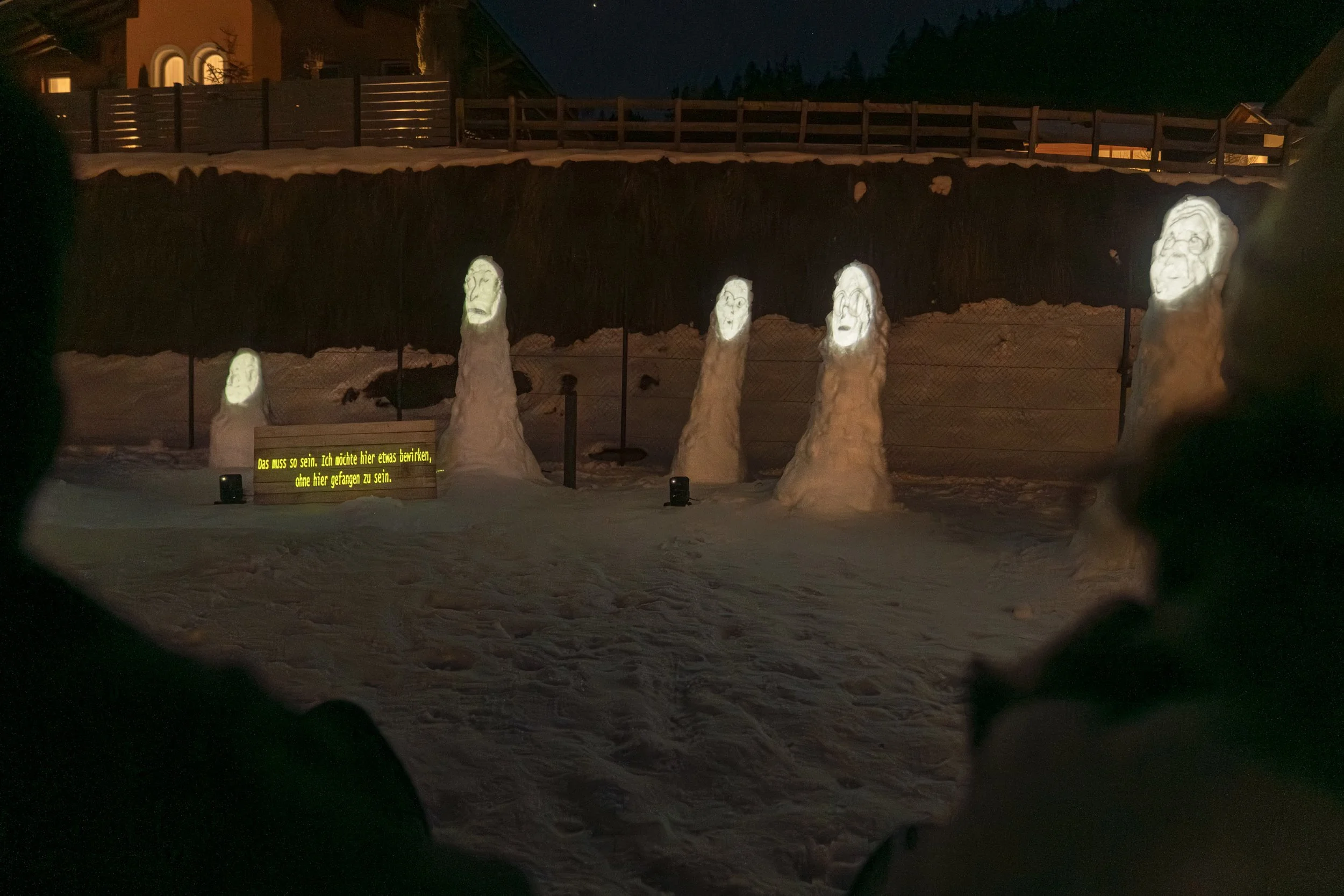
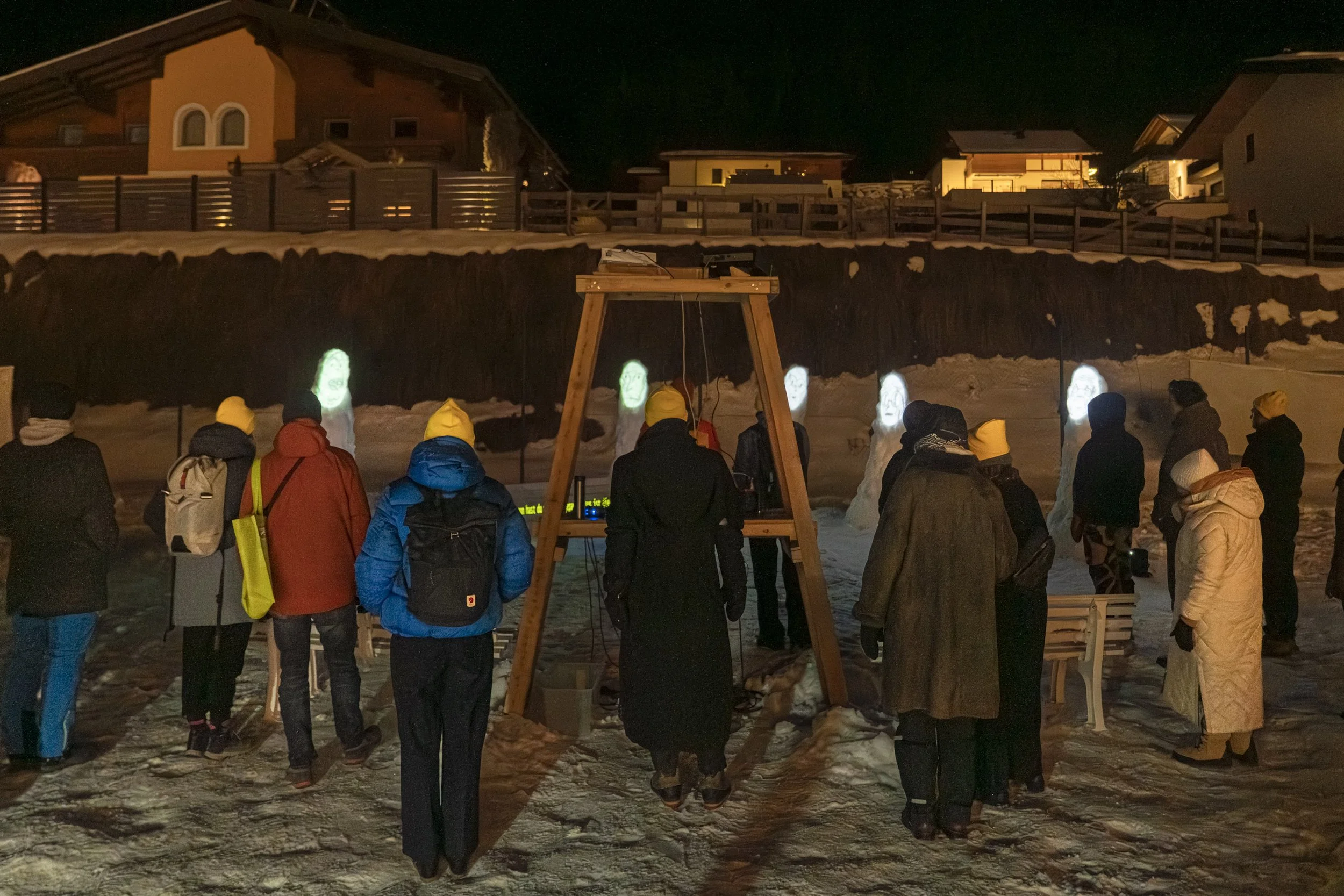
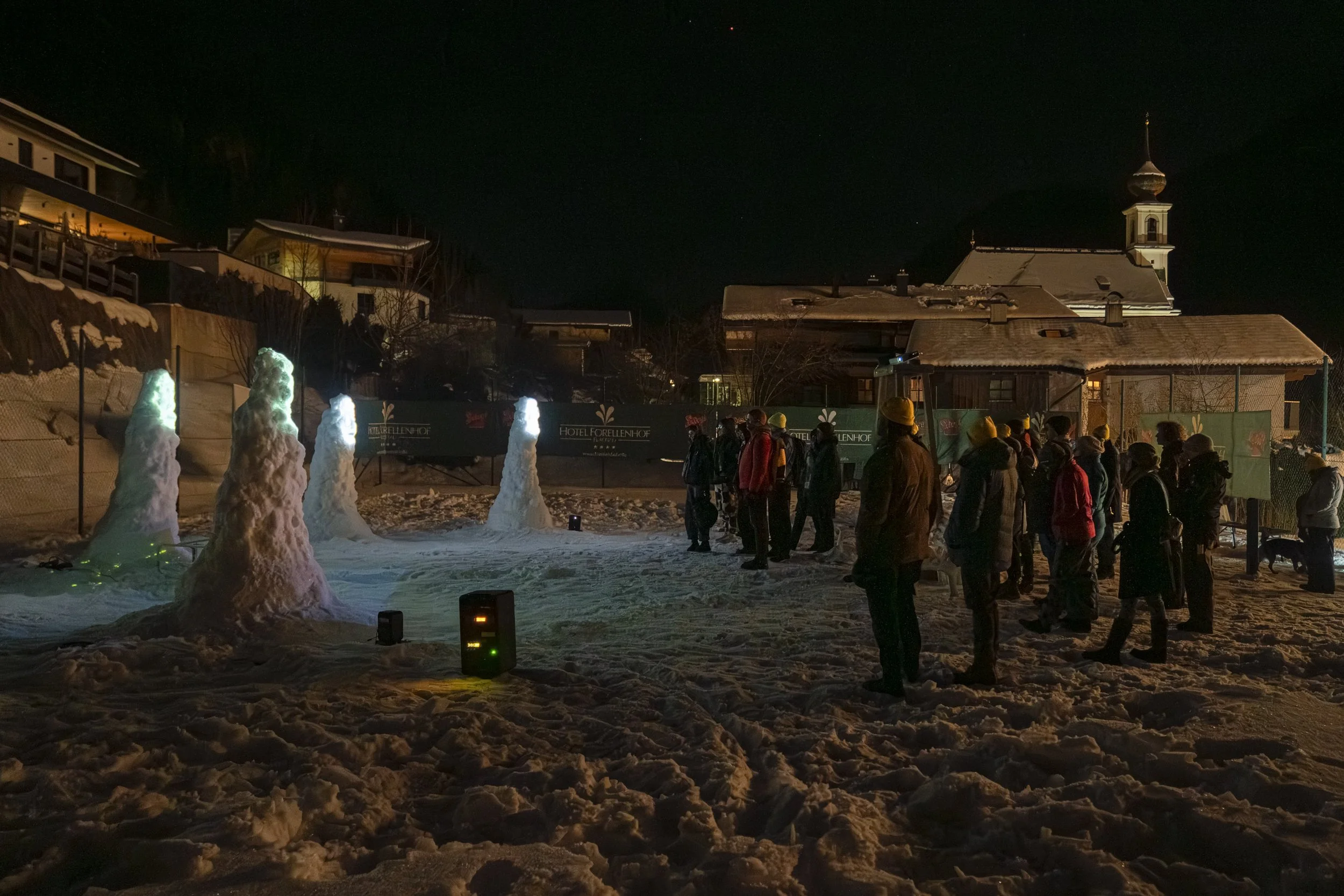
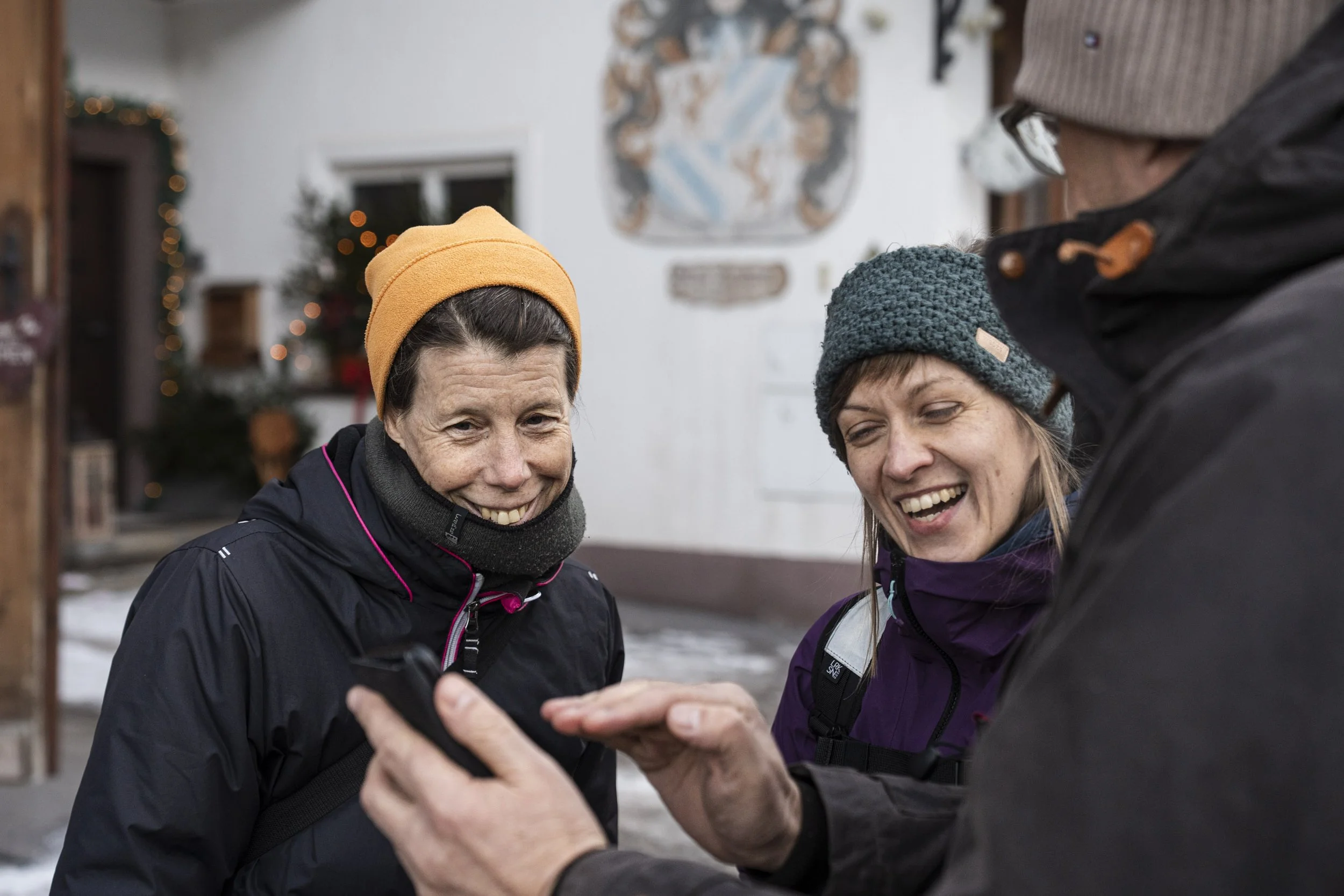
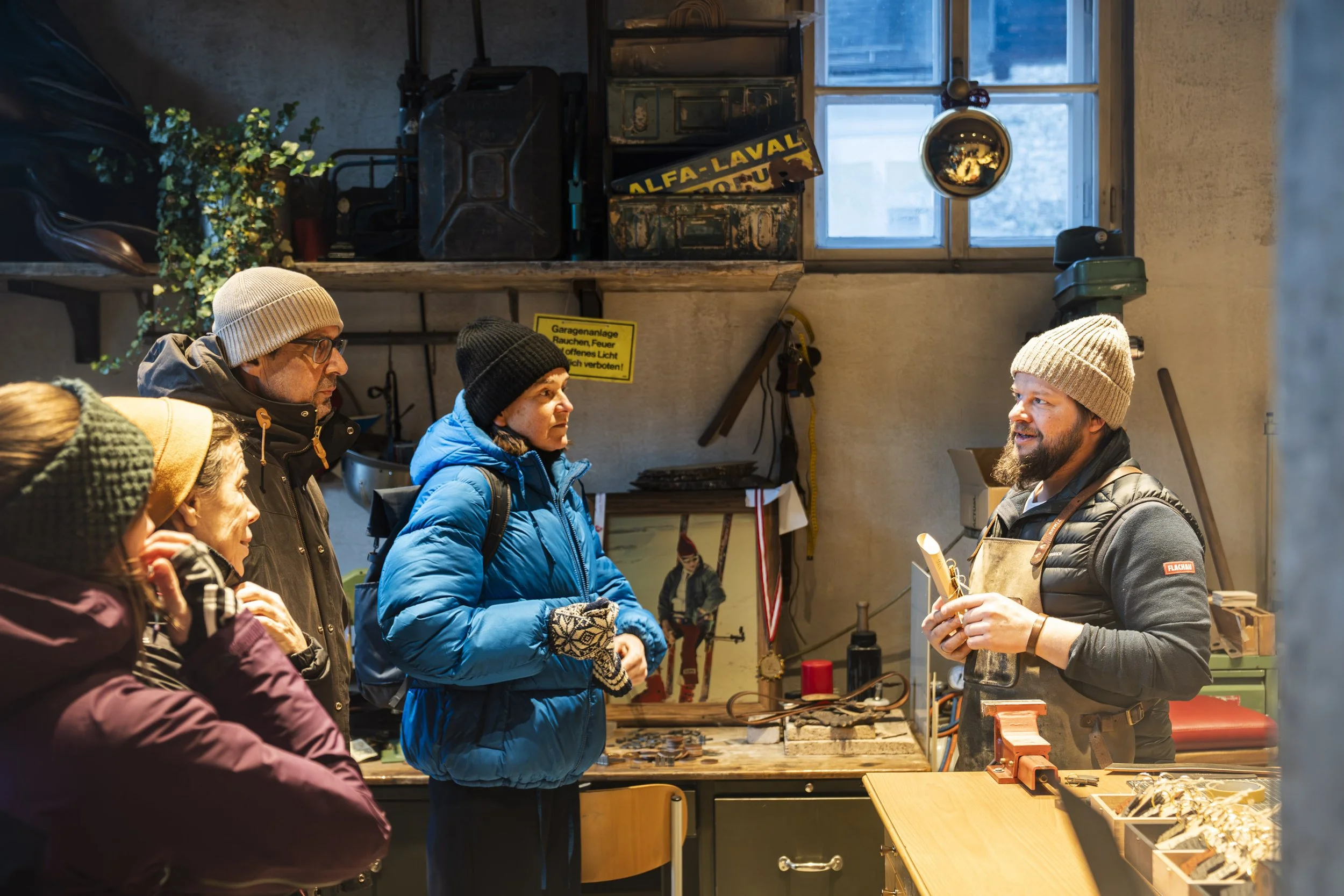
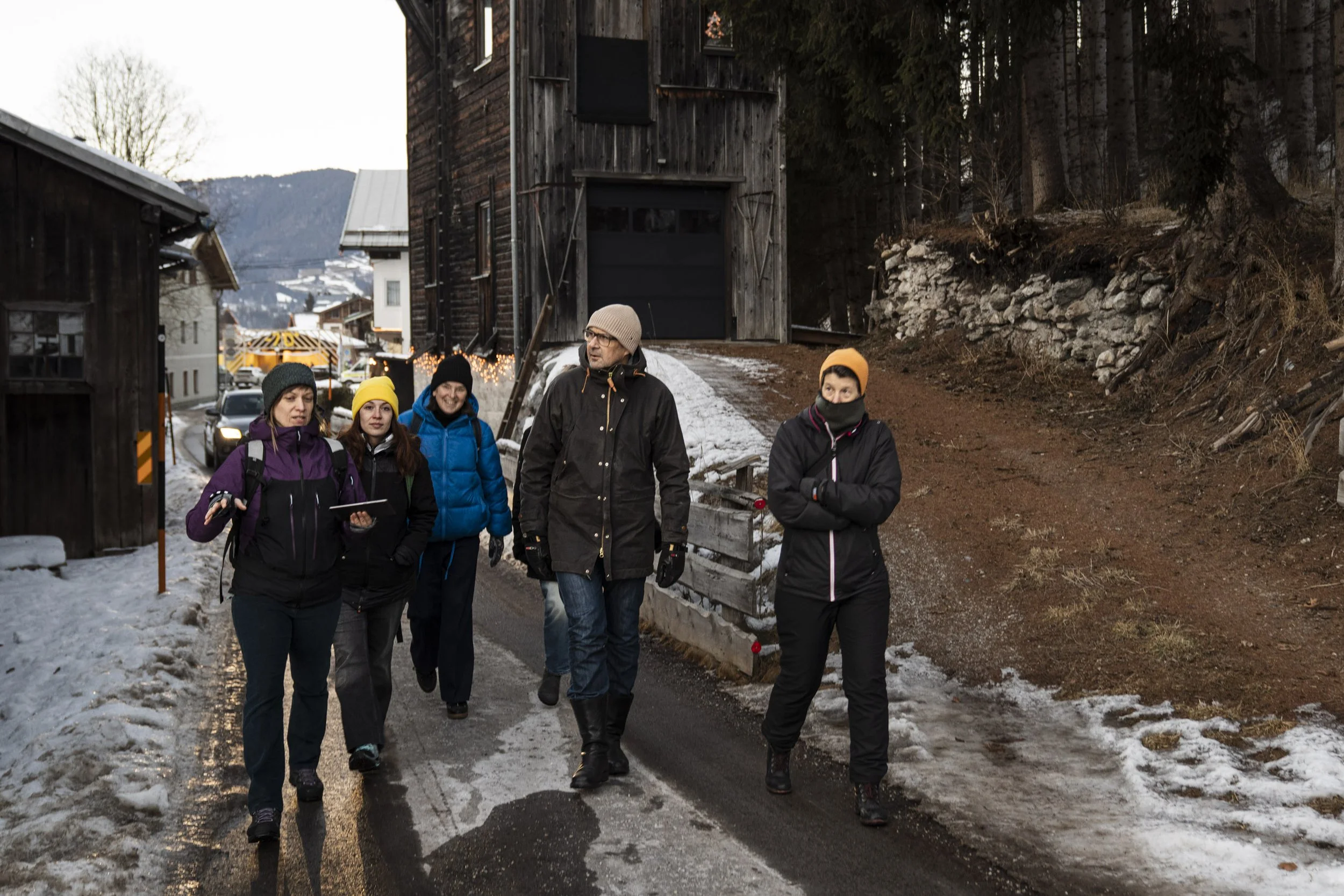
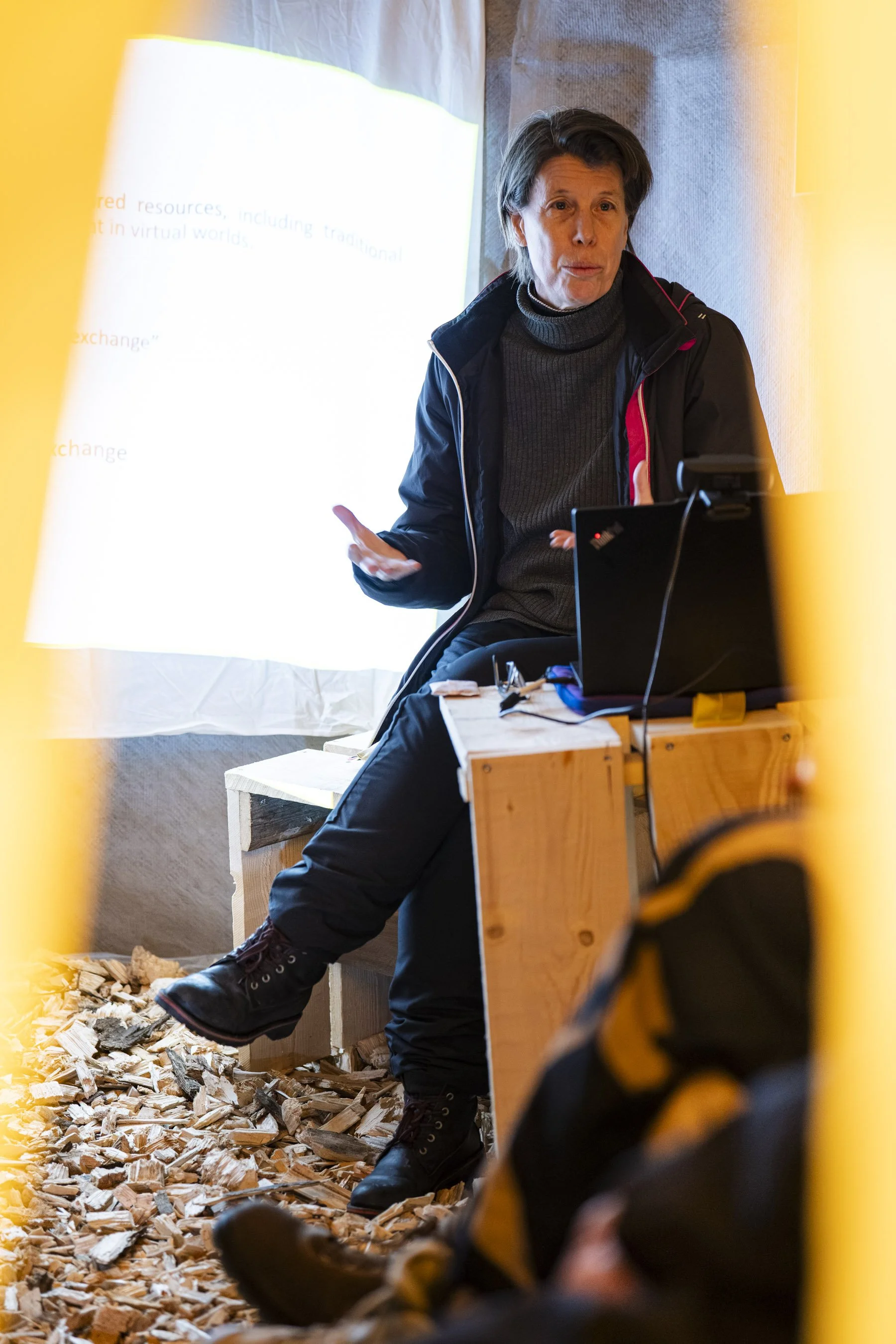
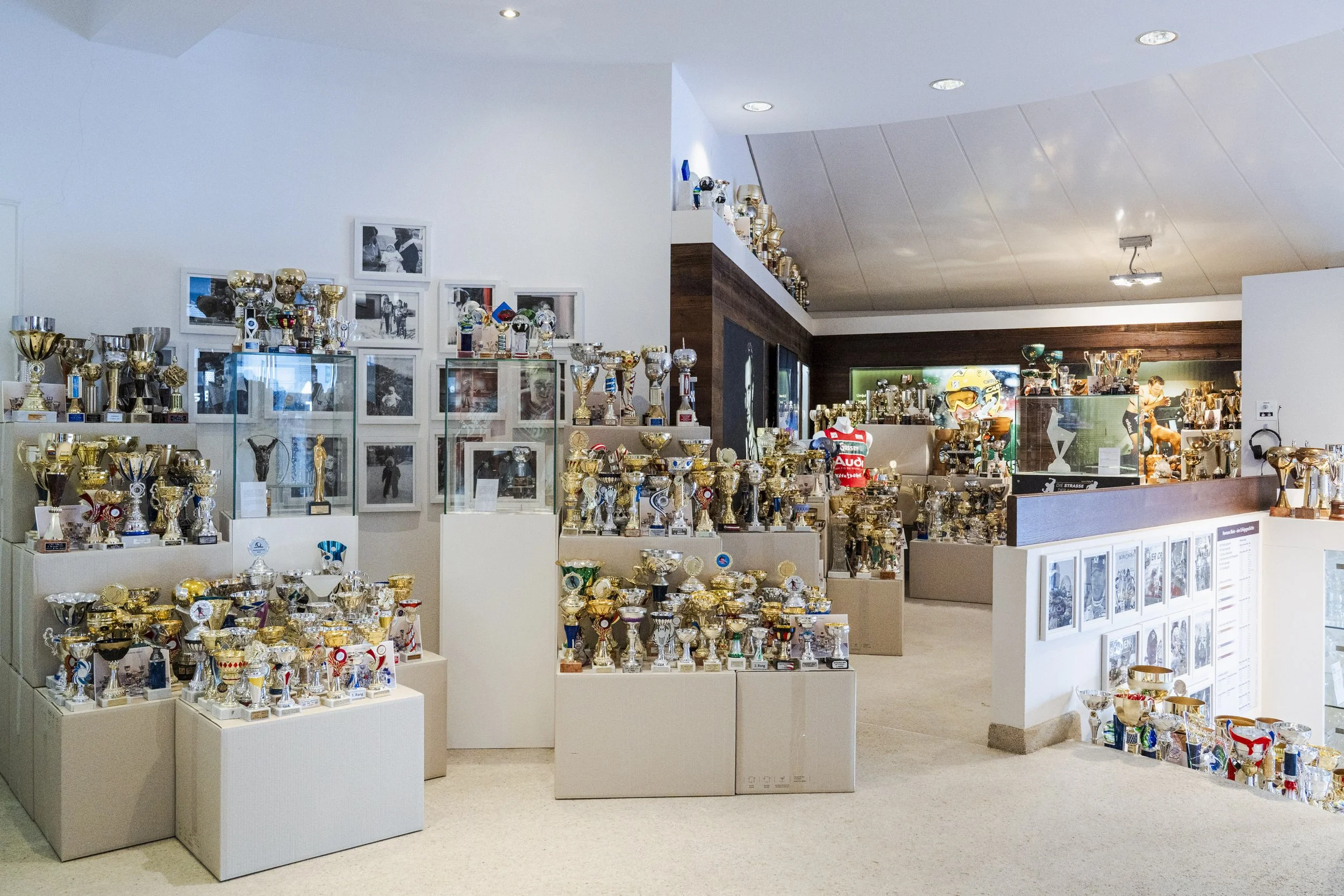
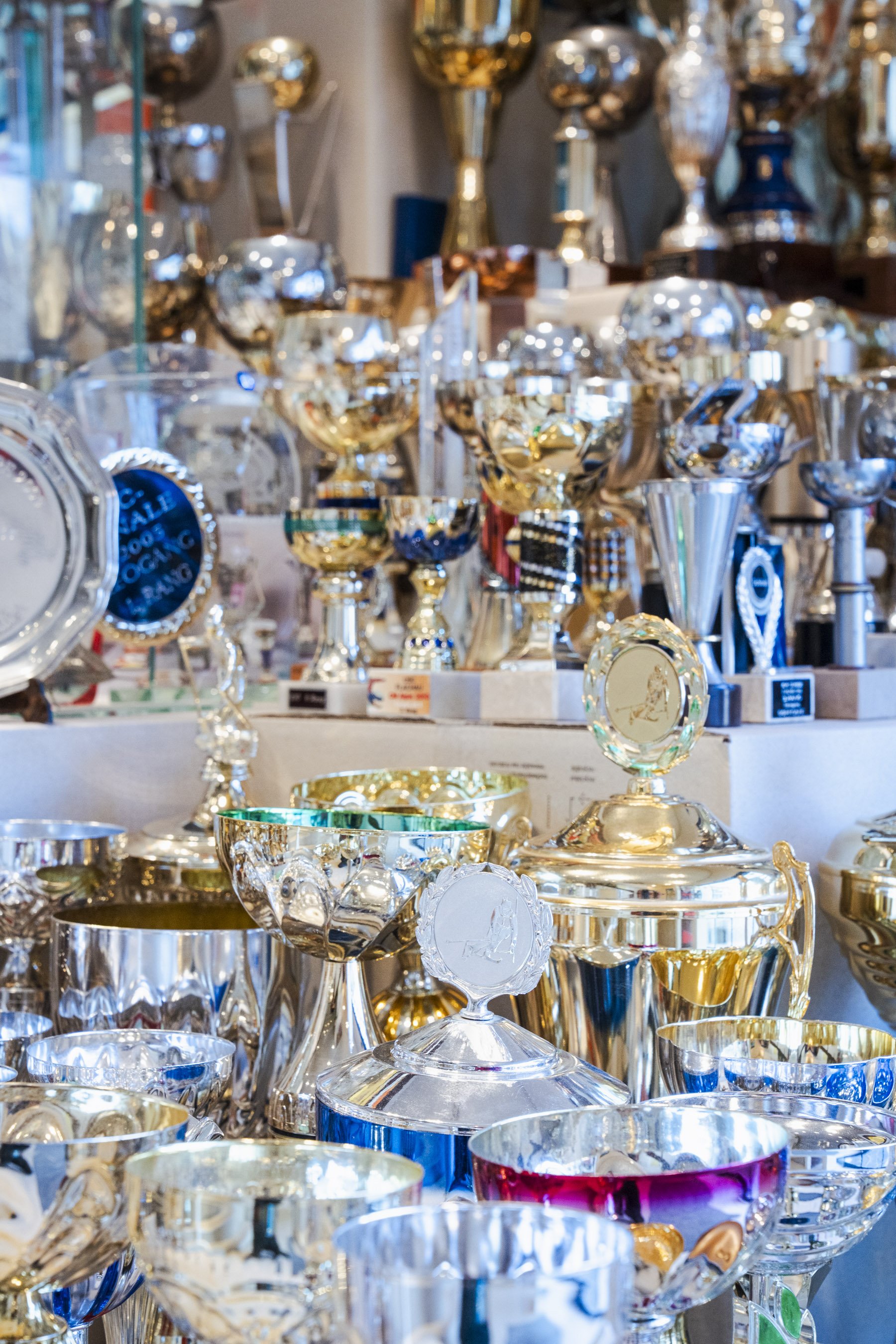
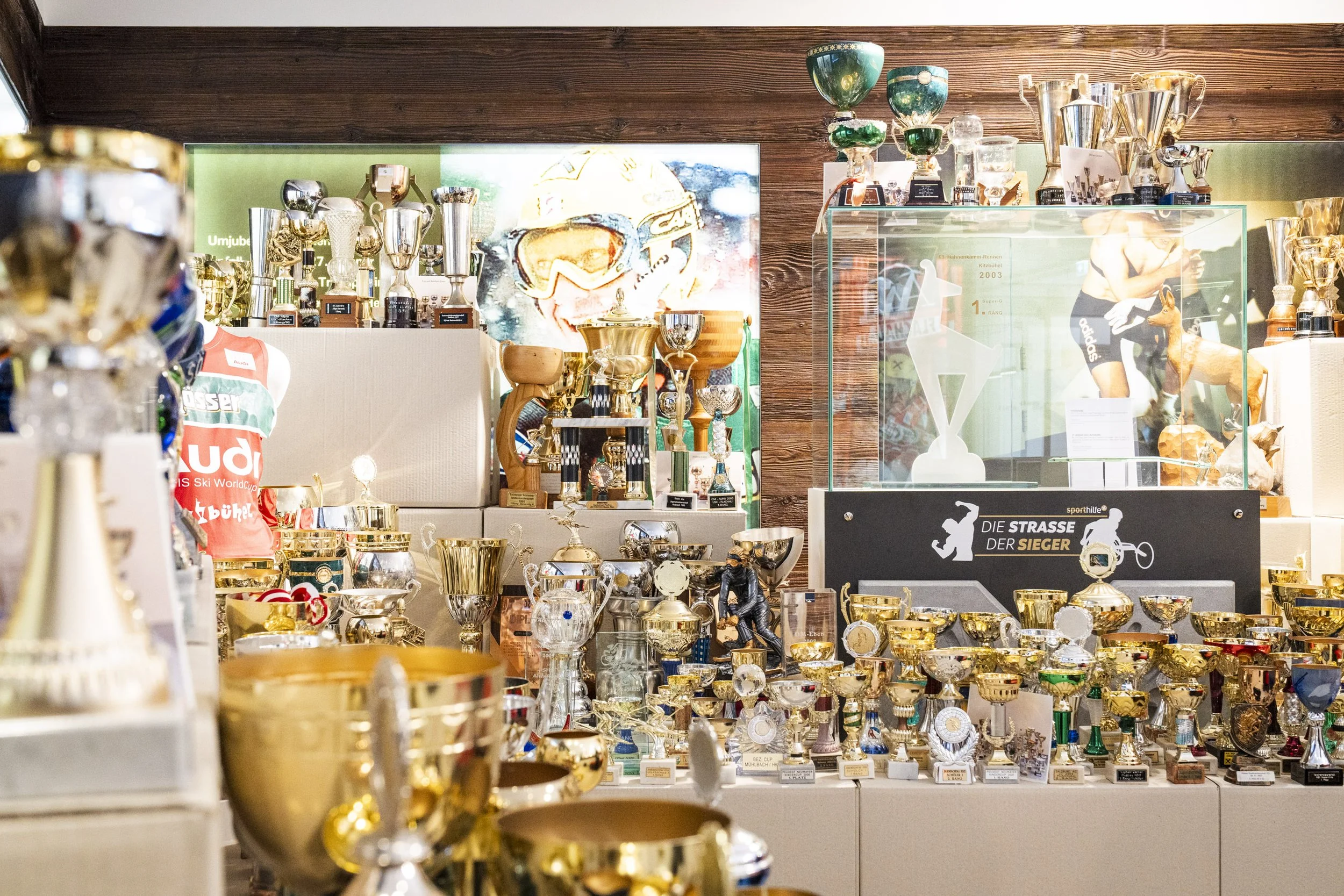
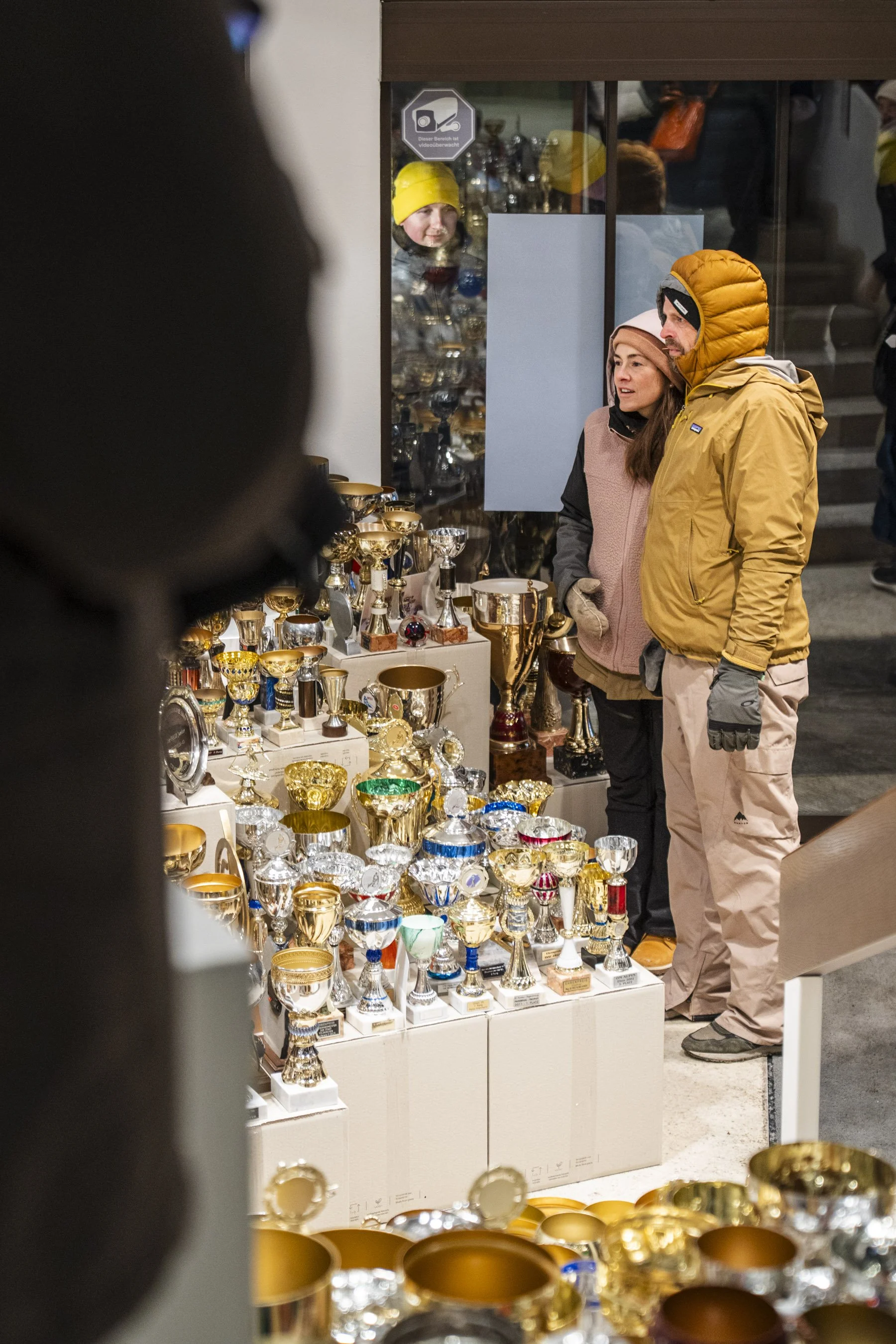
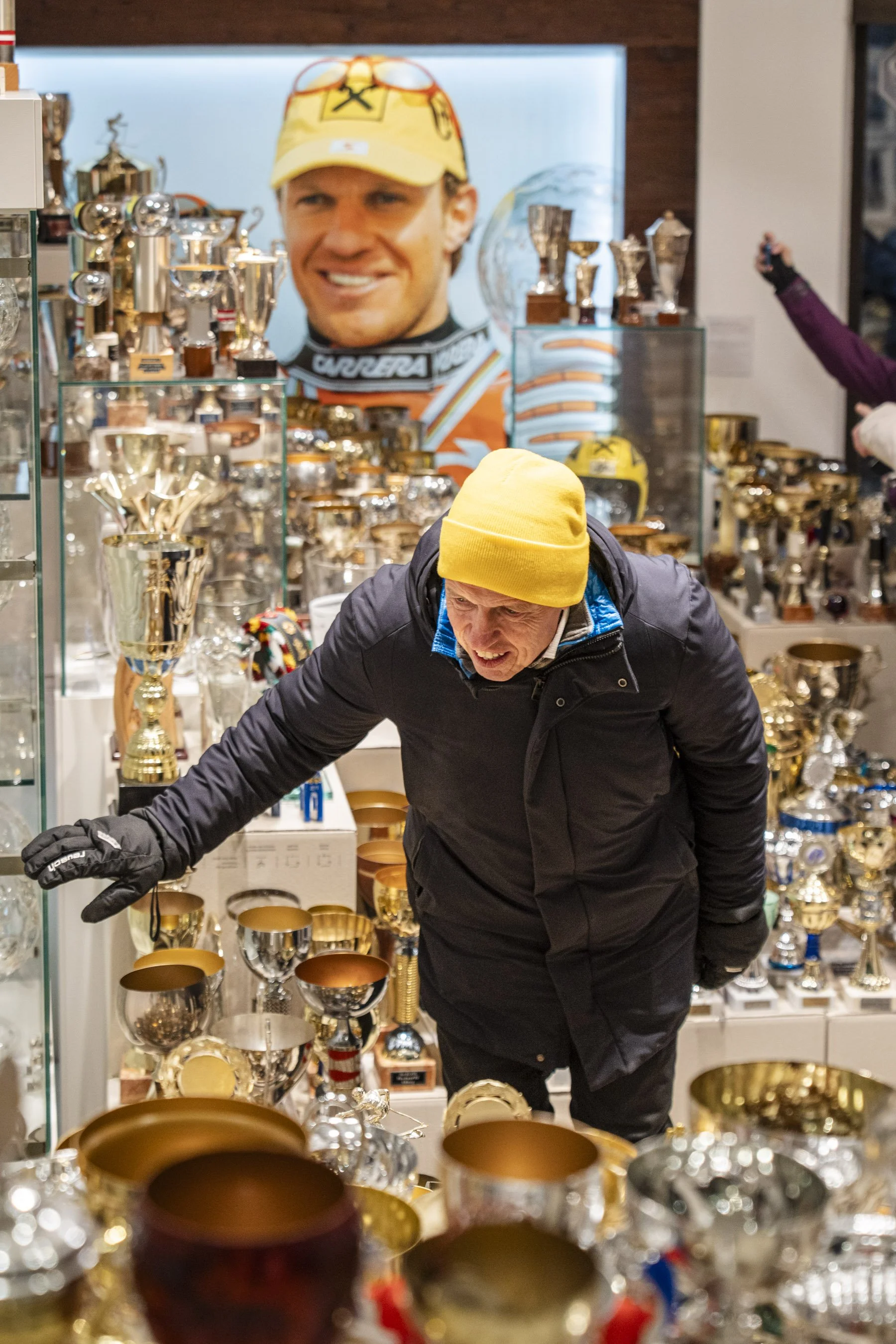
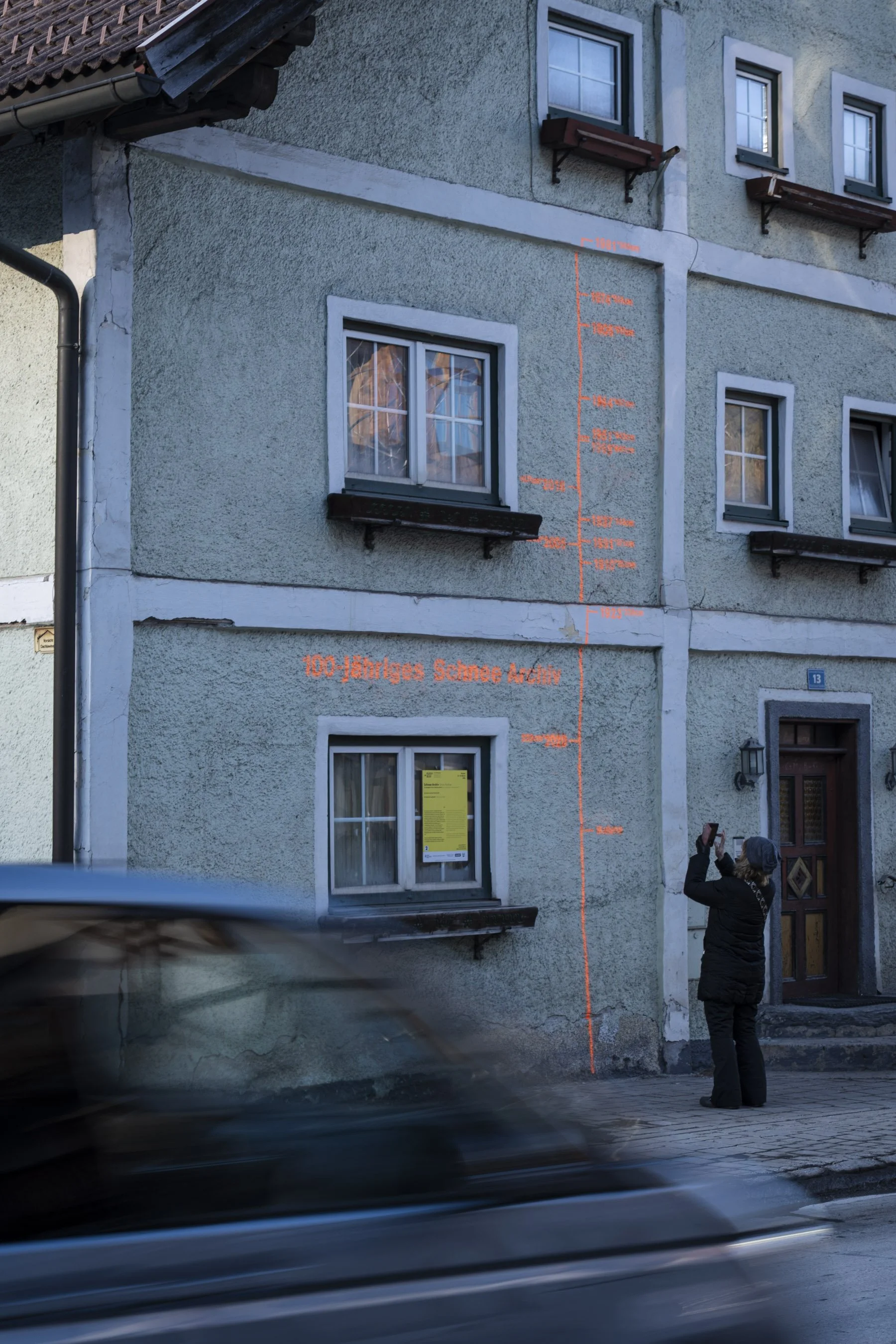
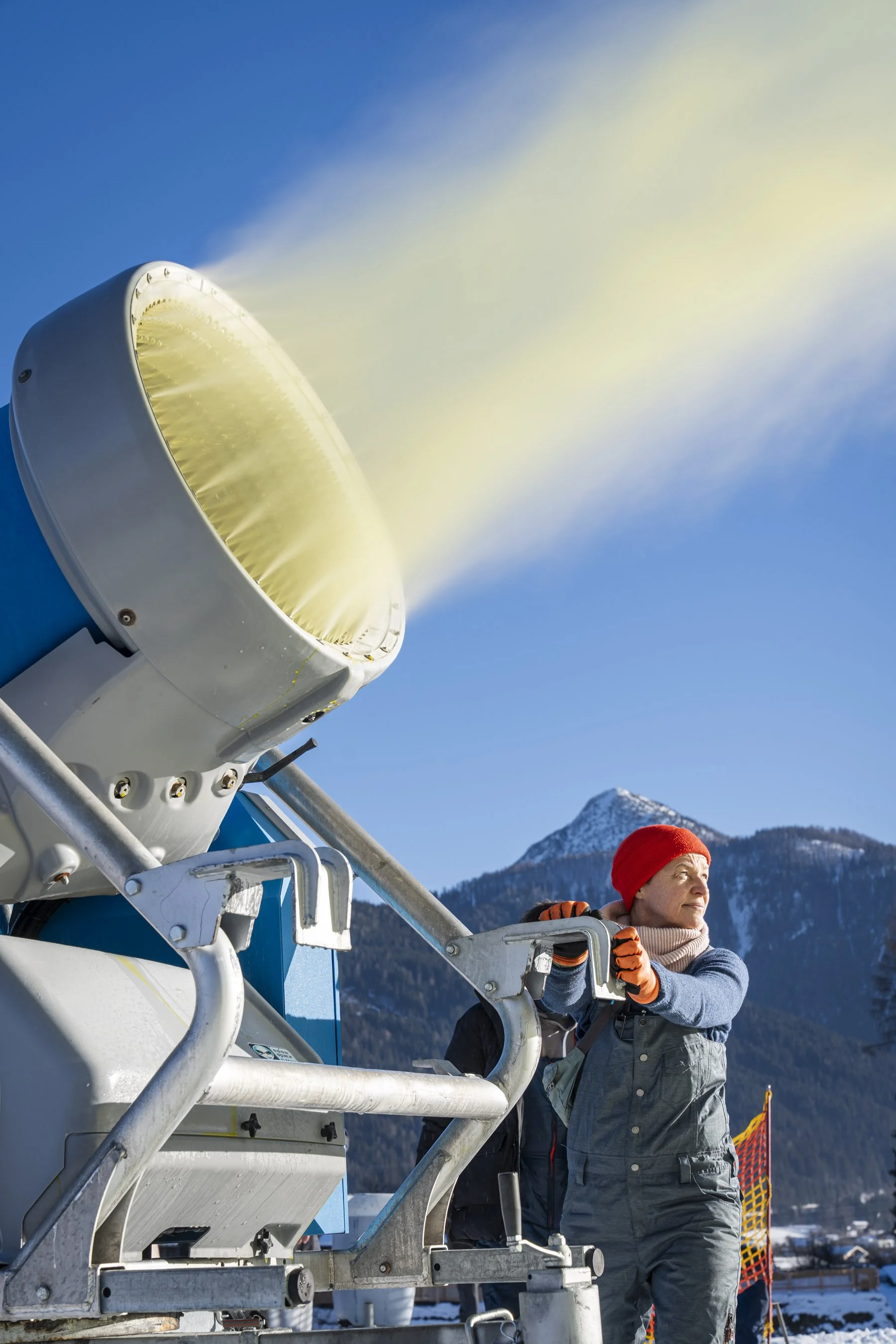
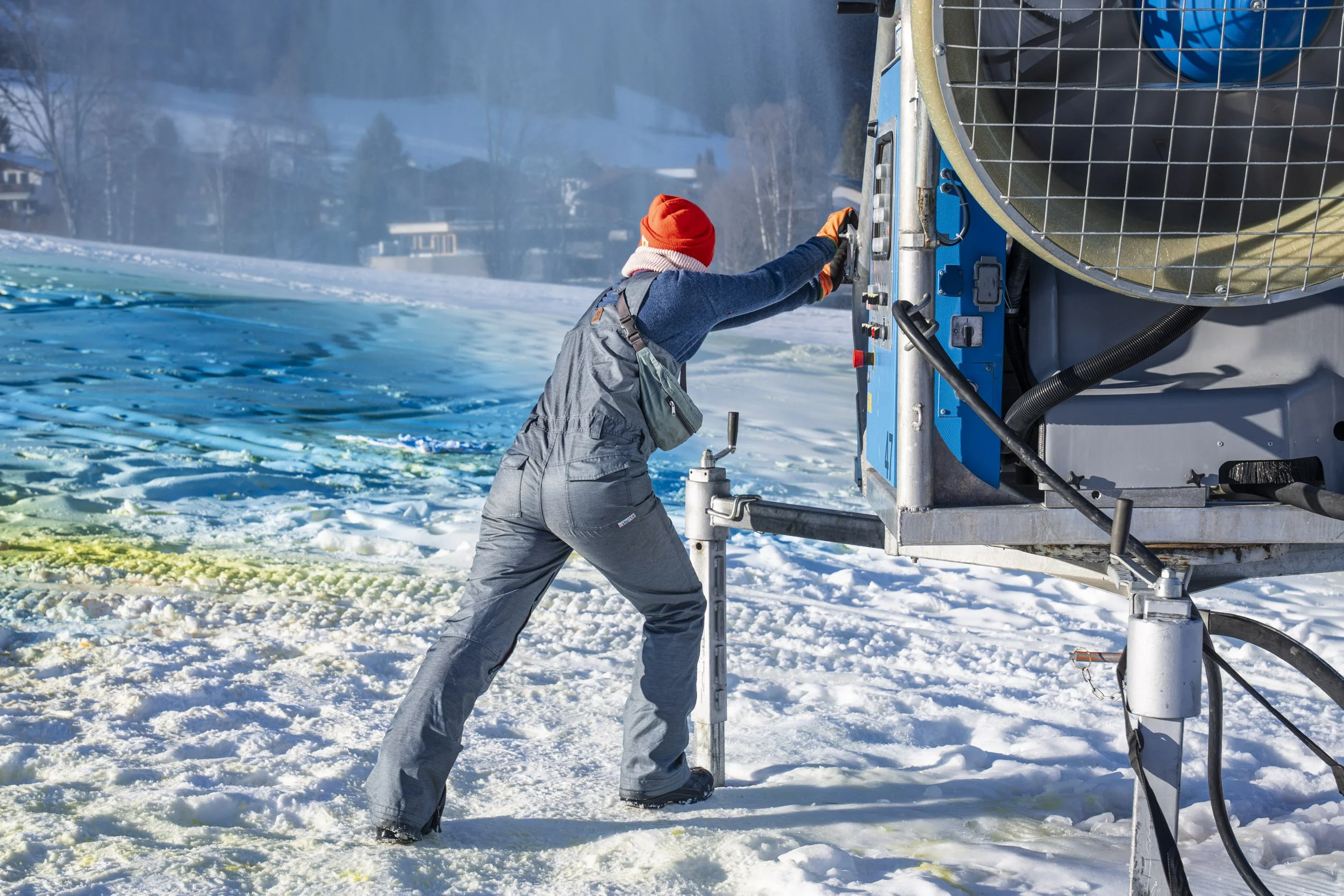
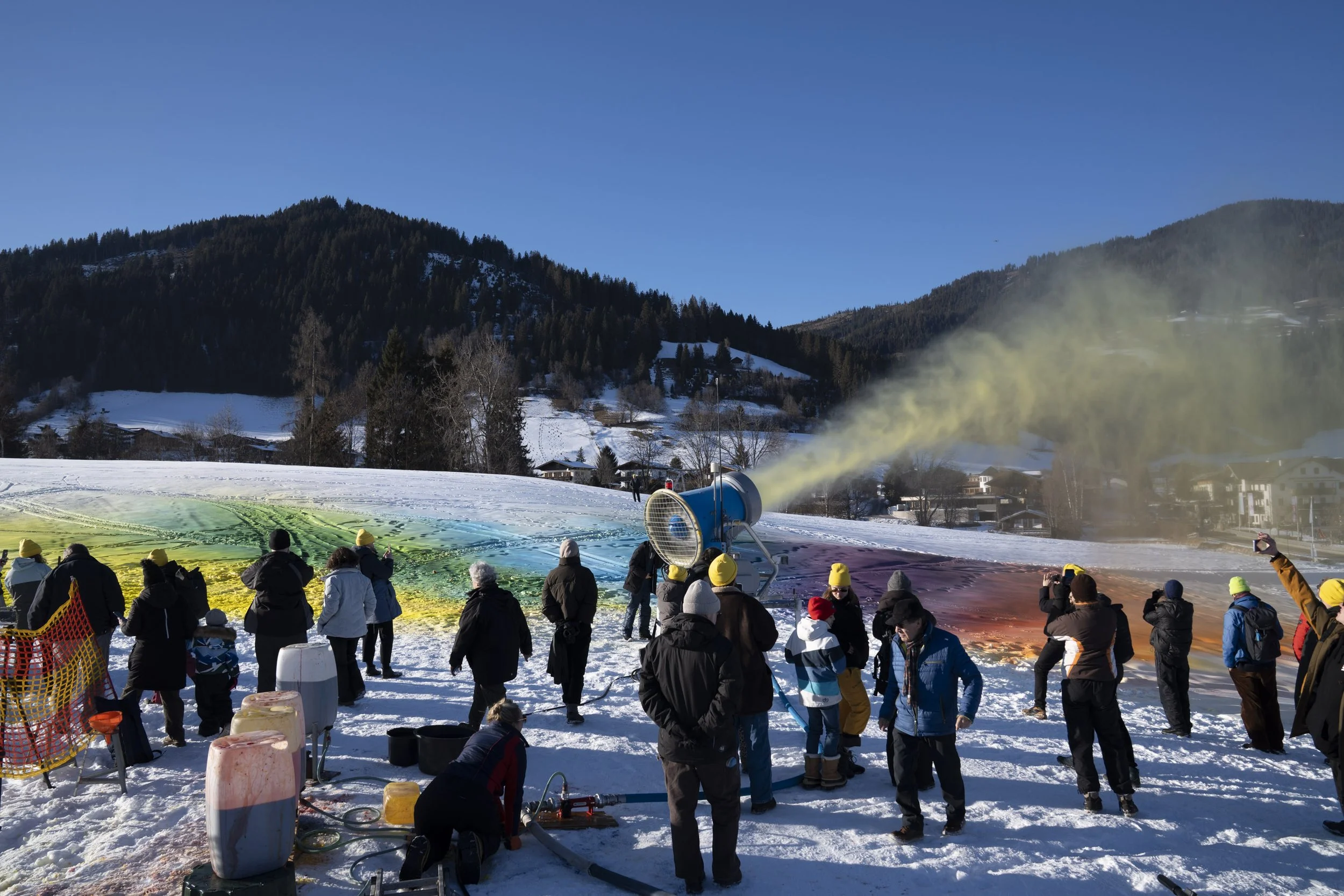
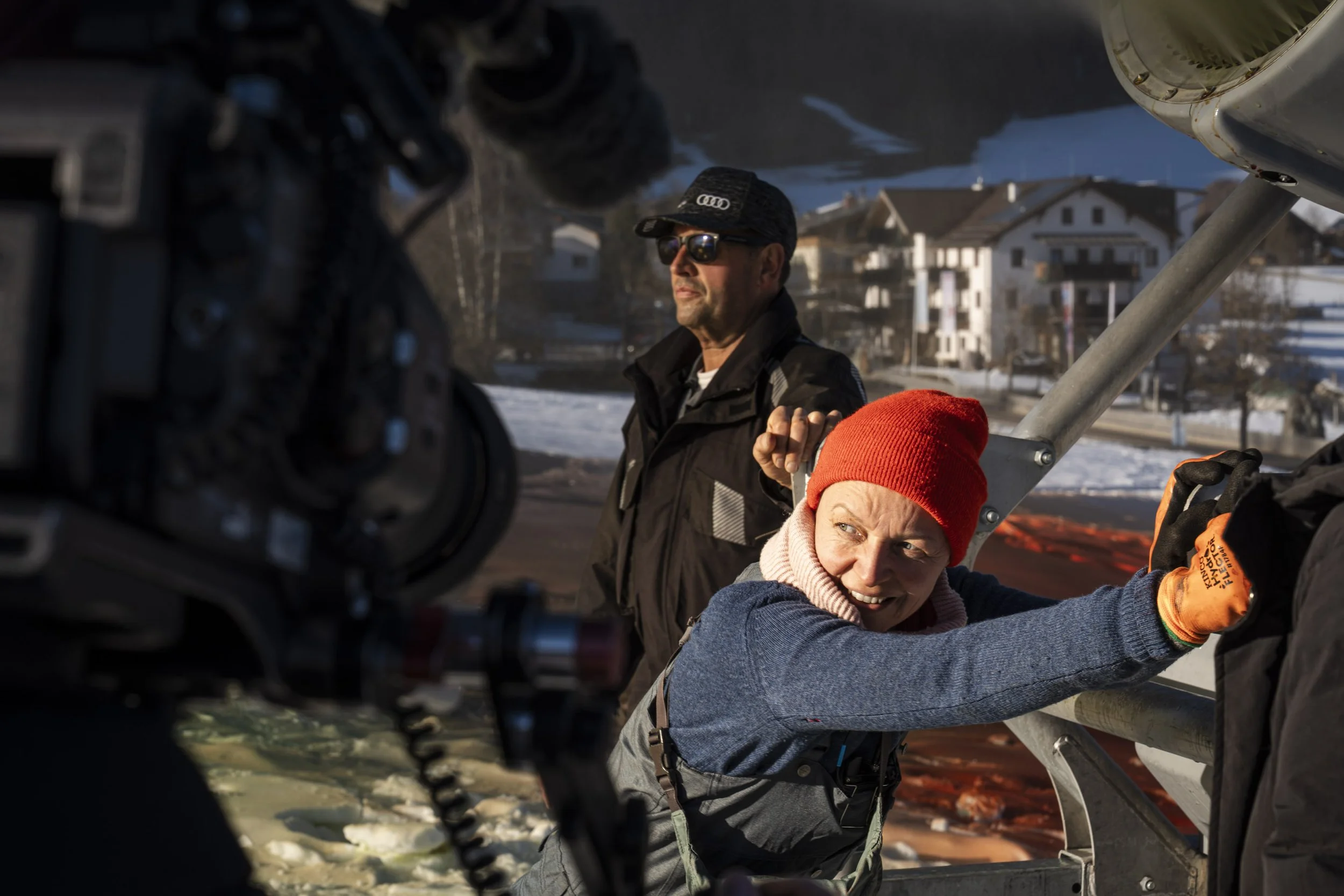
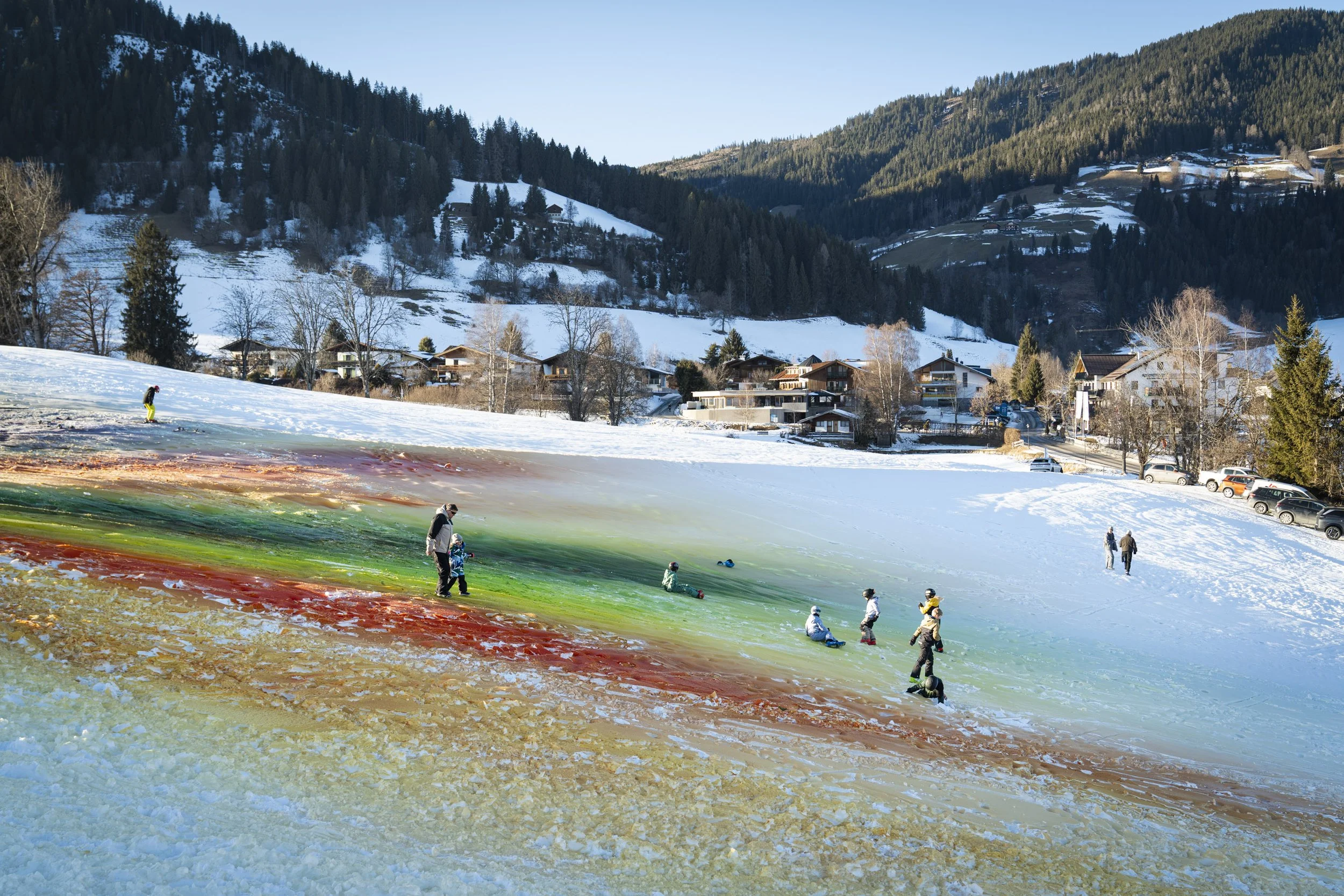
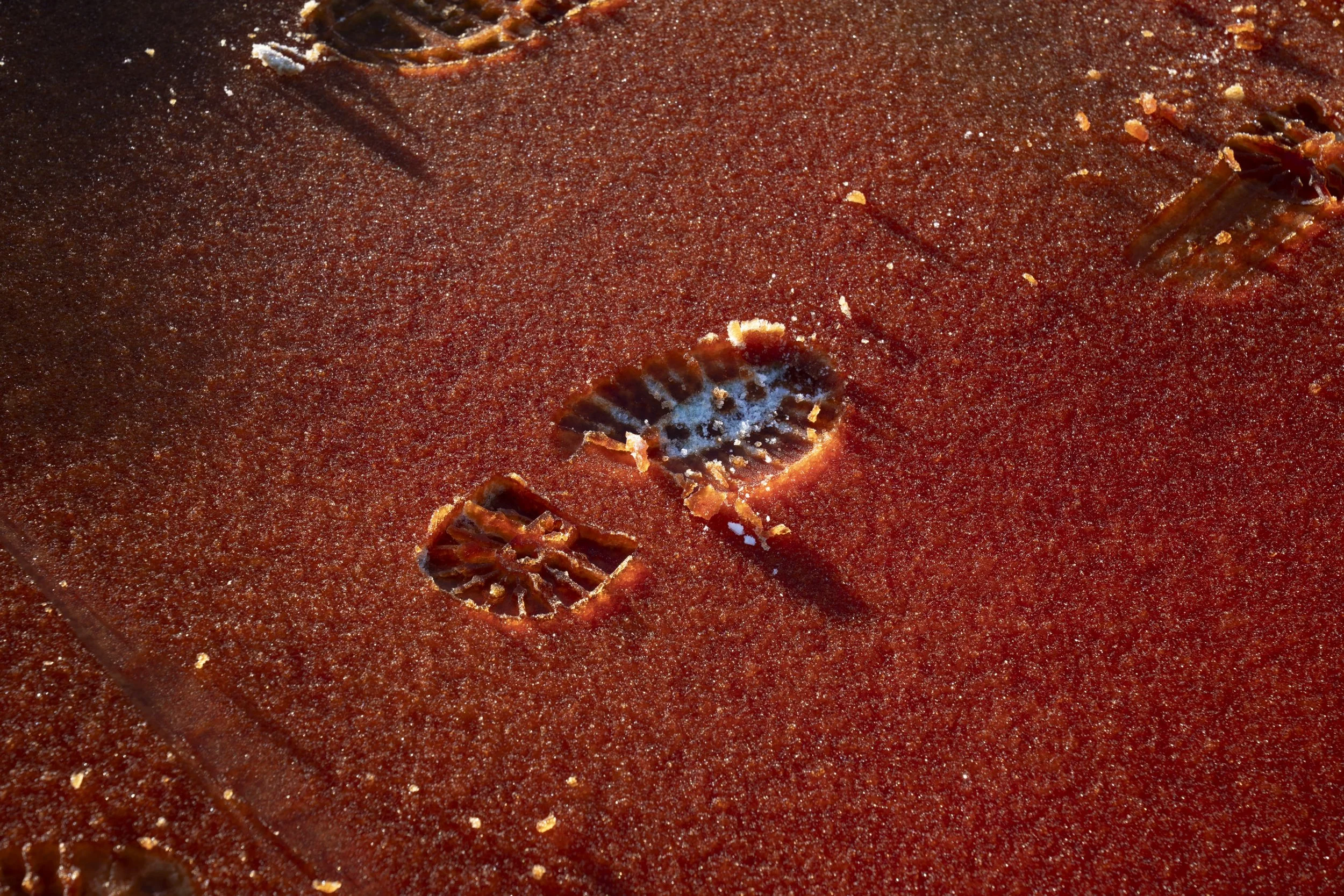
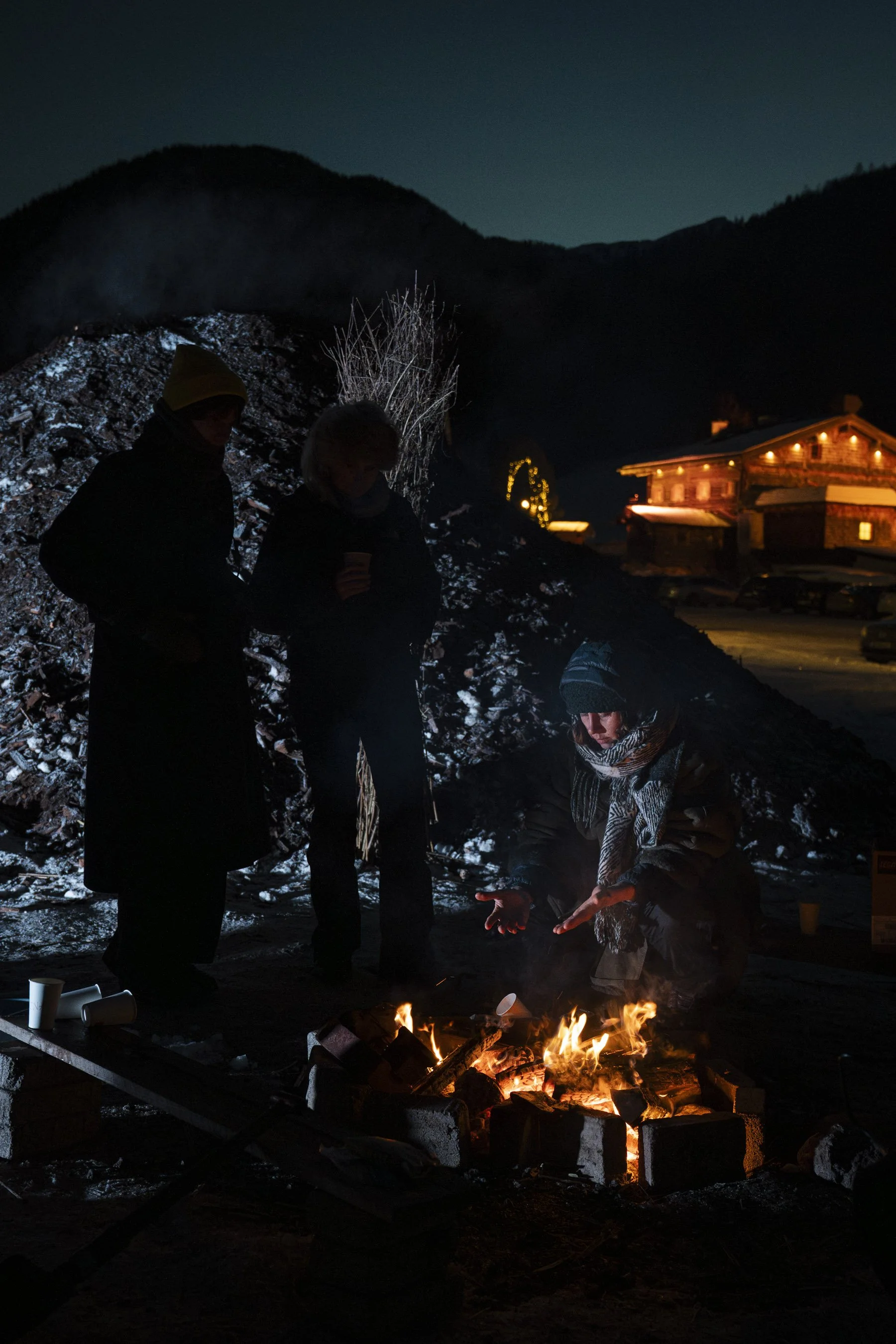
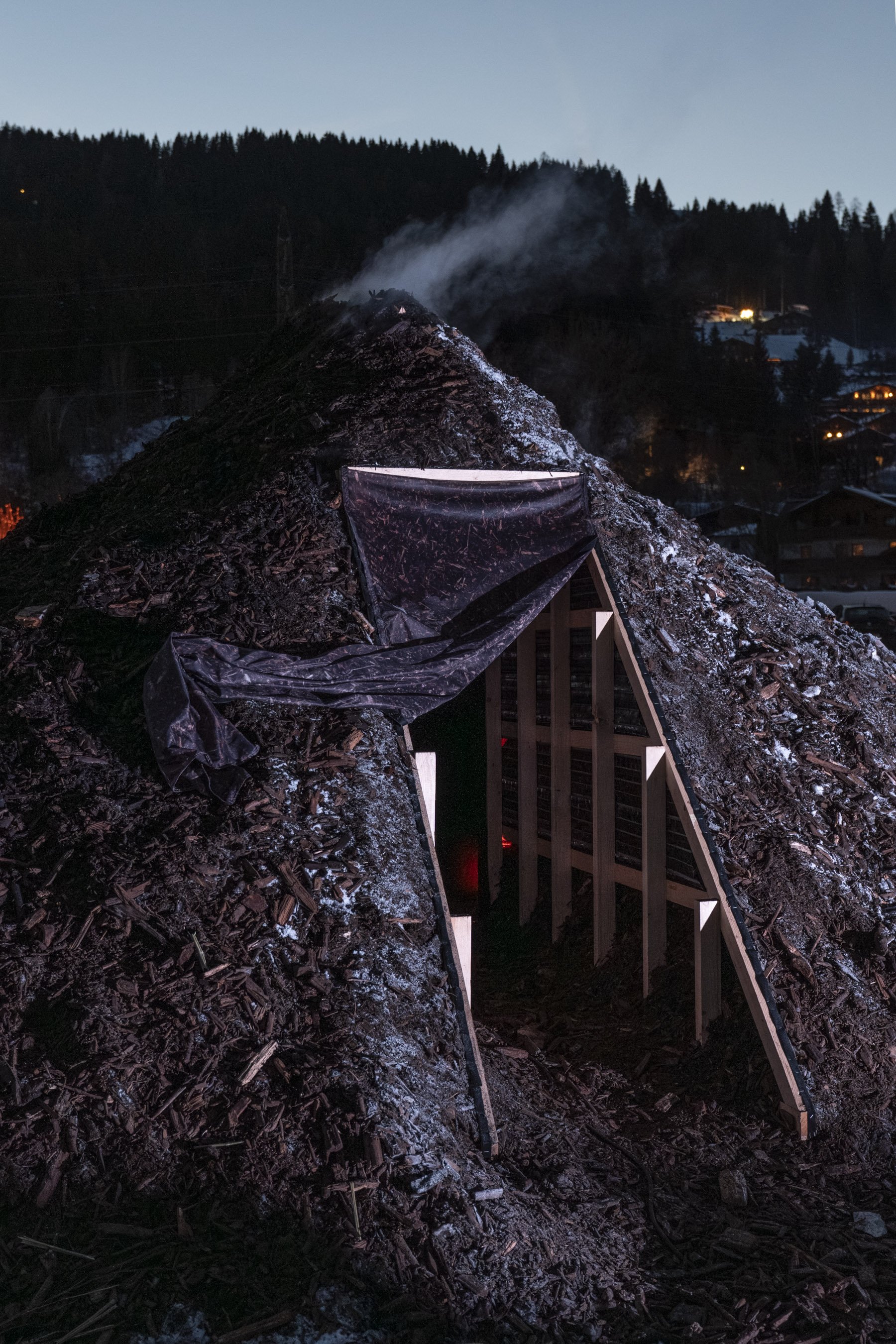
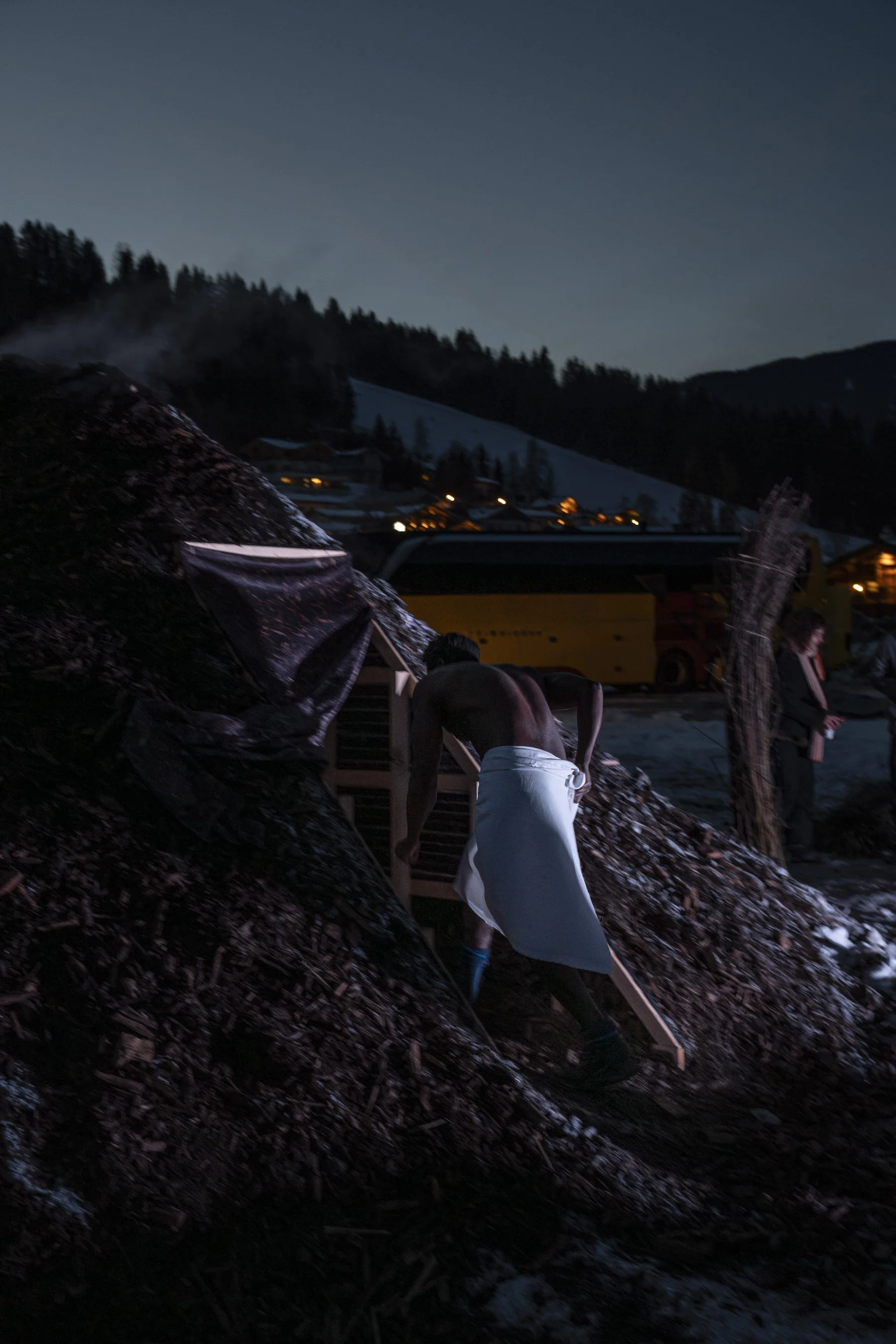
photo credits: halmeskobel
Artists / Works
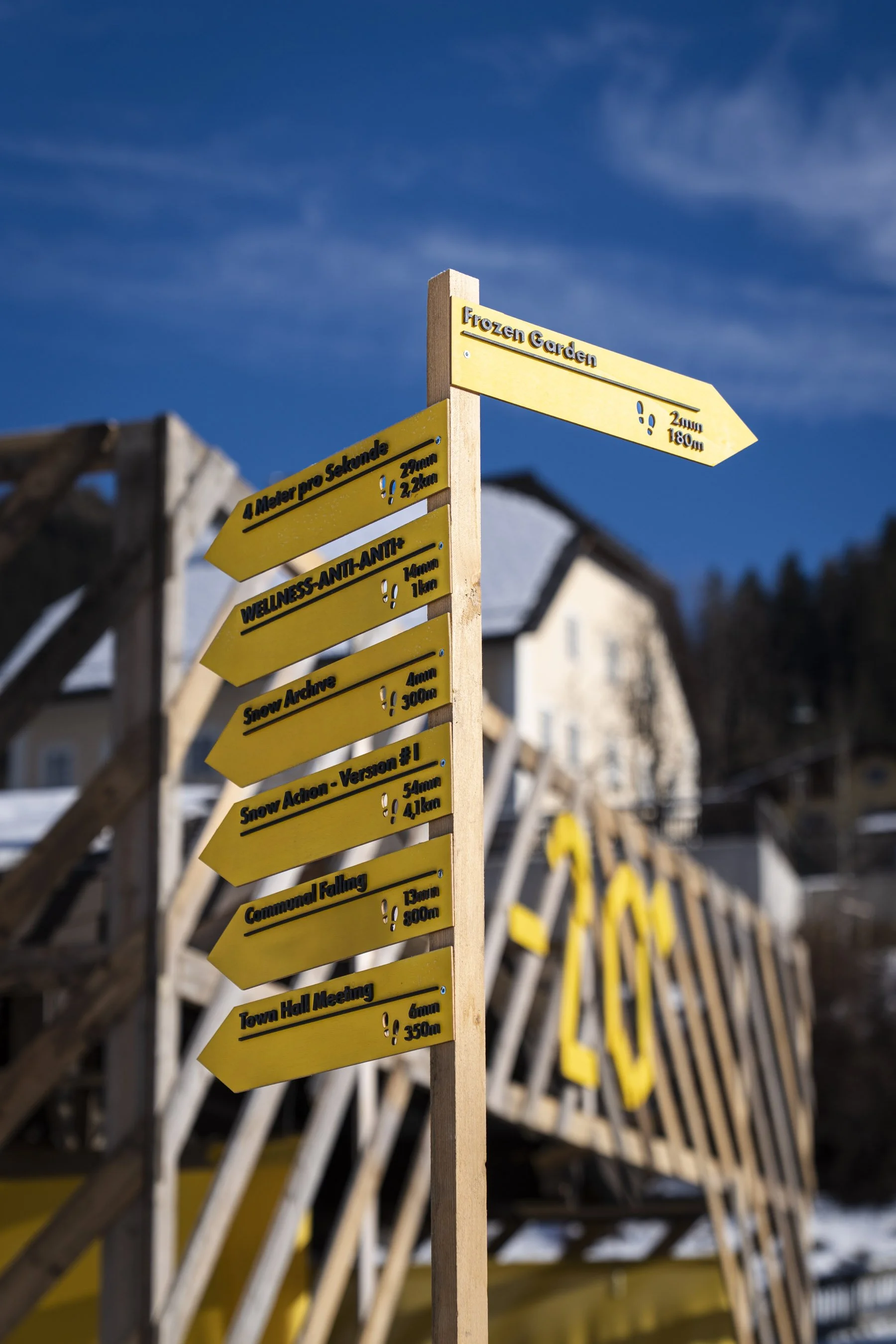
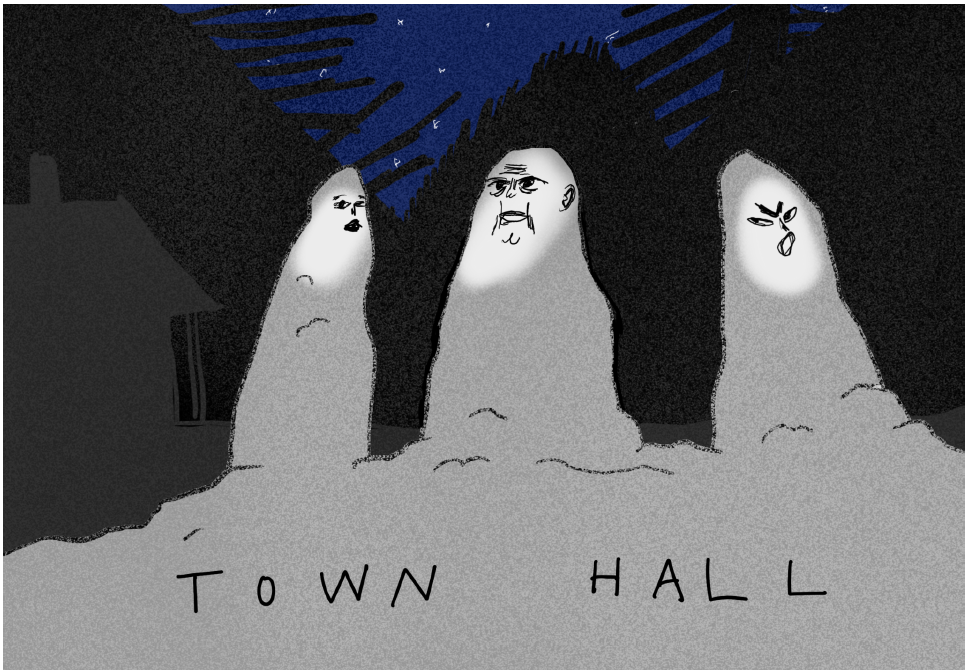
Town Hall Meeting – Ronni Shalev & Vero Róza Risnovska
Comical municipal council meeting of snowmen

Snow Archive – Nicole Six und Paul Petritsch
Exhibition on local snowfall and local skiing heroes